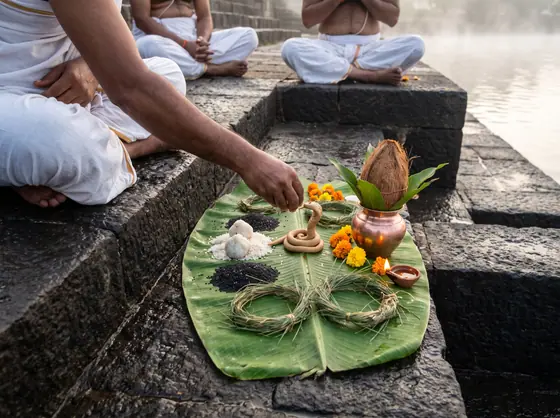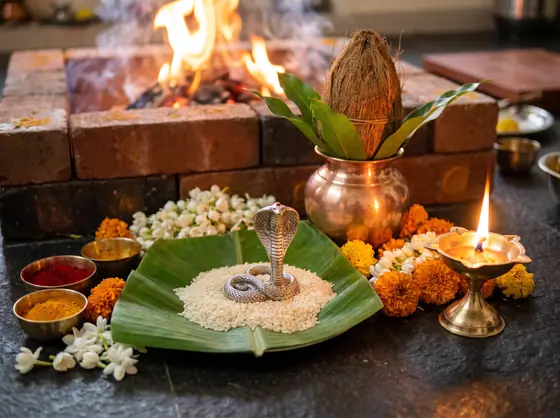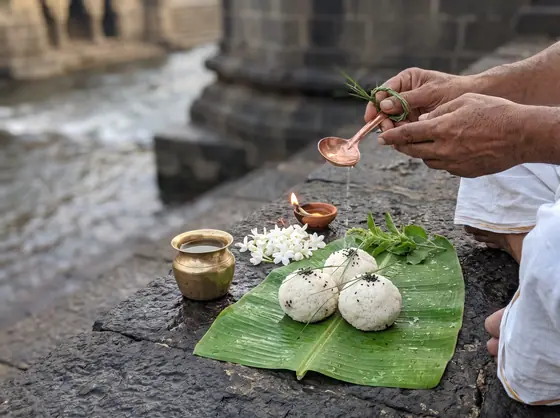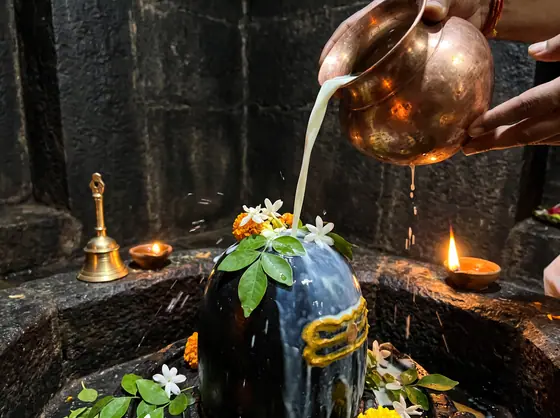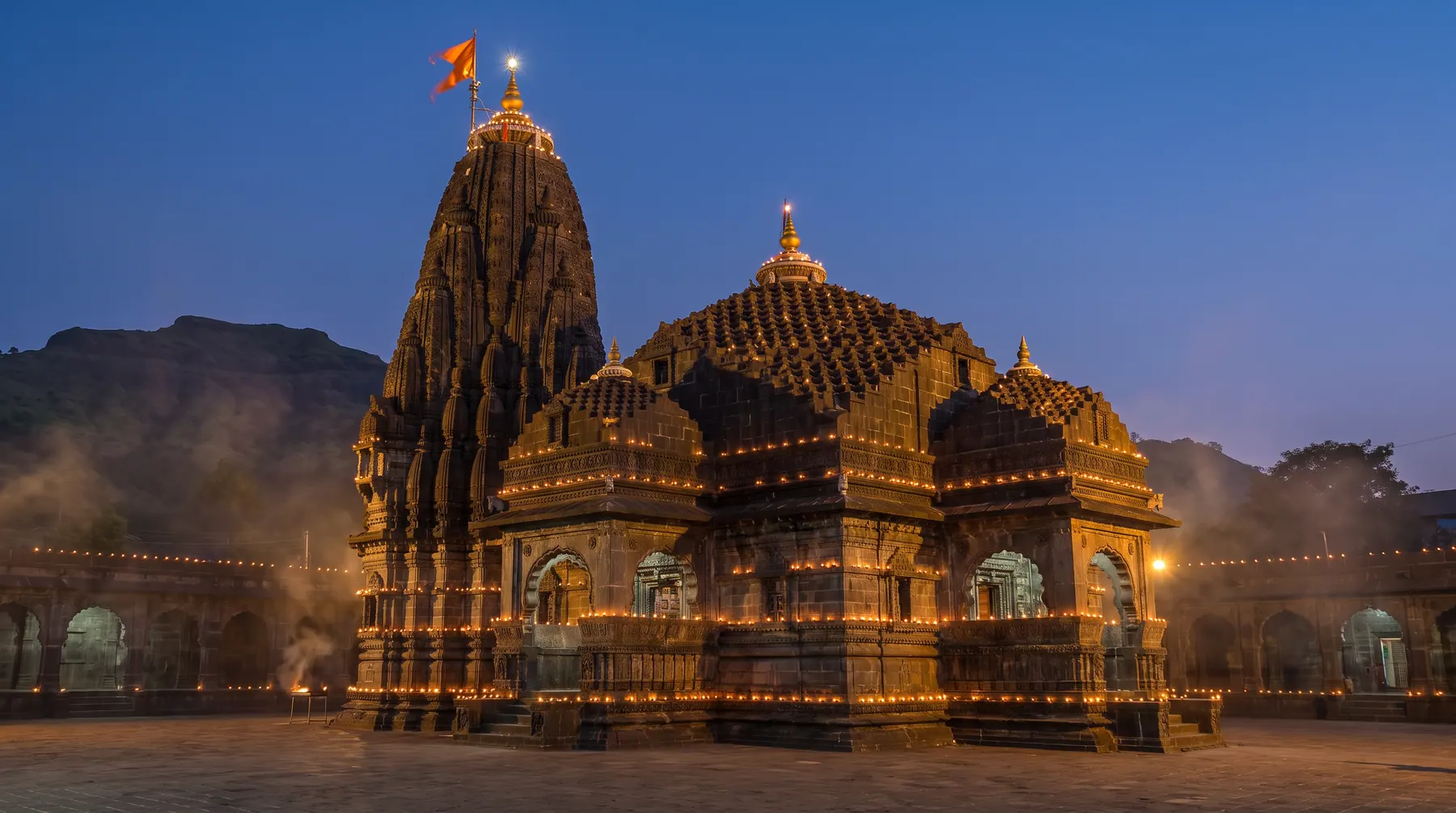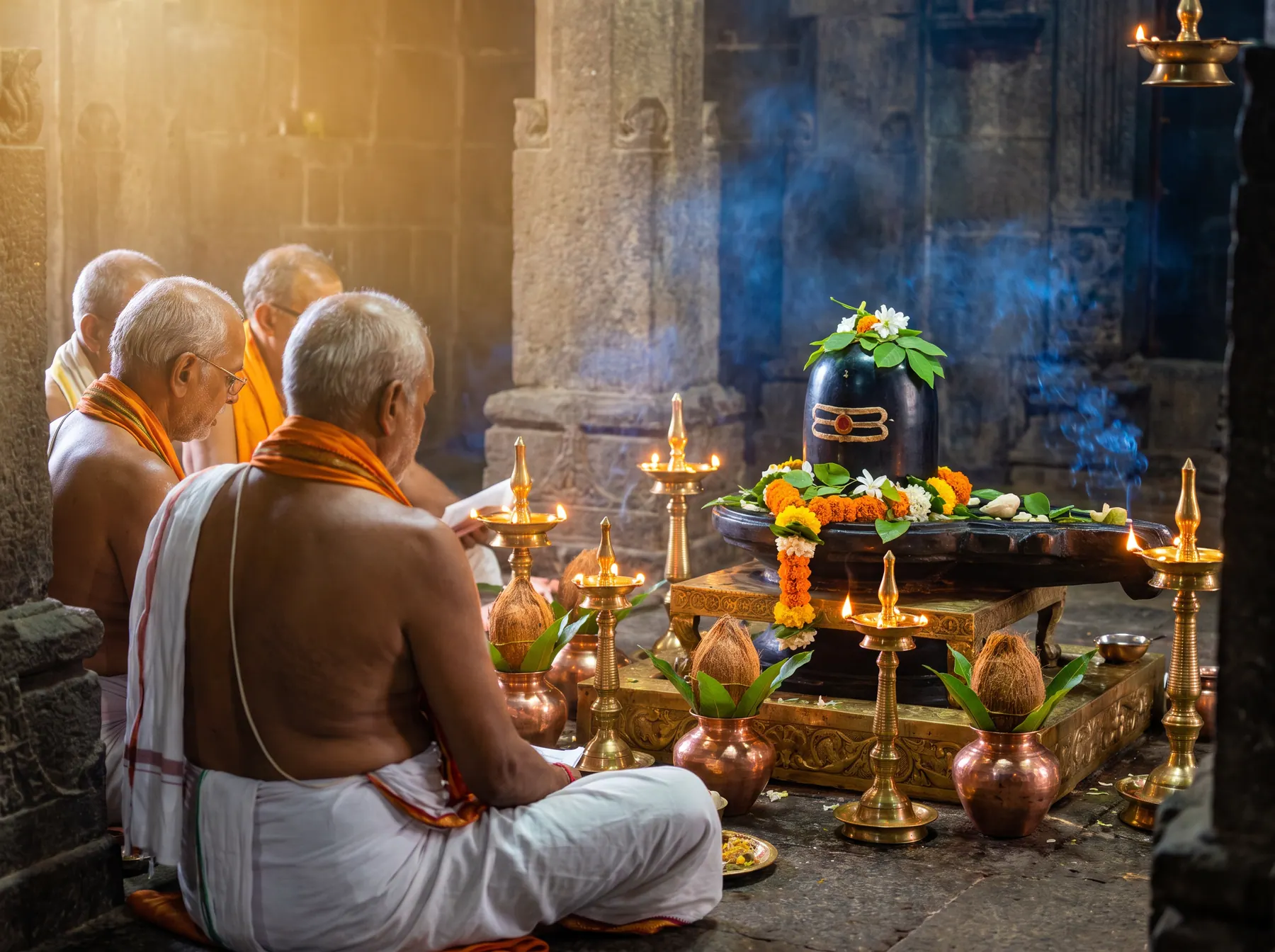
Laghu Rudra is the next step up from Rudrabhishek. In the traditional reckoning, reciting the Rudra eleven times makes an Ekadashini; eleven Ekadashinis, or 121 recitations, make a Laghu Rudra. The recitations are shared among a group of pandits who chant together while the Shivalinga receives continuous abhishek, and the day ends with a havan, purnahuti and aarti.
Families choose Laghu Rudra for occasions that feel important: a milestone birthday, a new home or business, a time of illness or difficulty in the family, or a vow made to Mahadev. It takes most of a day, and the sound of many voices chanting the Rudra together is something devotees remember for a long time.
Why at Trimbakeshwar
Performing an extended Rudra worship in the town of a Jyotirlinga is, for many devotees, the fulfilment of a long-held wish. At Trimbakeshwar, Shiva is worshipped as Tryambaka, and the town has a living tradition of Vedic chanting maintained by its purohit families.
Significance
The number eleven is closely tied to Rudra, who is described in tradition as having eleven forms (the Ekadasha Rudras). Repeating the Rudra in elevens is therefore a way of offering the hymn in fullness. A Laghu Rudra gathers many pandits in one shared act of worship, and the family sponsoring it takes part through the sankalp, the abhishek and the concluding havan.
In the scriptures
The hymn recited is the Rudradhyaya of the Yajurveda (Sri Rudram, from the Taittiriya Samhita of the Krishna Yajurveda, or the Rudra chapters of the Shukla Yajurveda, depending on the tradition). The scheme of Ekadashini, Laghu Rudra, Maha Rudra and Ati Rudra, each eleven times the one before, is a long-standing ritual convention.
Why devotees perform it
Laghu Rudra suits families and individuals marking an important occasion, praying through a hard time, fulfilling a vow to Shiva, or simply wishing to offer a larger act of worship than a Rudrabhishek. No prior experience is needed: we explain everything beforehand and guide you through the day.
- Marking a milestone birthday, anniversary, new home or new venture
- Praying for a family member during illness or difficulty, alongside medical care
- Fulfilling a vow (sankalp) made to Lord Shiva
- Offering a fuller form of Rudra worship than a single Rudrabhishek
- Seeking Shiva's blessings for the whole family together
How the pooja is performed
Sankalp and Ganesh pujan
The day begins with Ganesh pujan, punyahavachan and the sankalp in your family's name.
Kalash sthapana and Navagraha pujan
The kalash is installed and the Navagrahas are invoked before the main worship.
Rudra recitations with abhishek
The pandits recite the Rudra together, completing 121 recitations, while abhishek is offered on the Shivalinga. You take part in the abhishek.
Havan and purnahuti
A havan is performed with Rudra mantras, concluding with the purnahuti, the final full offering.
Aarti and blessings
The day ends with aarti, prayers for the family and blessings from the pandits.
Before you come
- Plan for most of the day (4 to 6 hours). Arrive in Trimbak the evening before if travelling from outside Nashik. We will confirm timings on WhatsApp.
- Clothing: clean traditional clothes: dhoti or kurta-pyjama for men, saree or salwar suit for women.
- Bring: names and gotra (if known) of family members to be included in the sankalp.
- Food: many families keep to sattvic food on the day. Elders and children can take breaks as needed.
- Family members are welcome to join for the havan and aarti even if they cannot stay all day.
What we arrange
- Abhishek and havan samagri
- Sankalp in your family's name and gotra
- Guidance through the day
Dakshina covers the pooja as described. Ask us about samagri and stay.
Questions devotees ask
How is Laghu Rudra different from Rudrabhishek?
Rudrabhishek is a short abhishek with Rudra chanting. Laghu Rudra is 121 recitations of the Rudra by a group of pandits with continuous abhishek, followed by havan, and takes 4 to 6 hours.
How many pandits perform Laghu Rudra?
Laghu Rudra is traditionally performed by a group of pandits sharing the recitations.
Is Laghu Rudra suitable for first-time devotees?
Yes. You do not need to know the mantras. We explain each stage and tell you when to take part.
Which day is good for Laghu Rudra?
Mondays, Pradosh, Shravan and Mahashivratri are traditionally favoured, but it can be performed on most days. Book well ahead for festival periods.
What does Laghu Rudra cost?
The current dakshina is shown at the top of this page, with what it covers listed under What we arrange. A small advance may be requested to confirm your date.
Can family members join for only part of the day?
Yes. The person taking the sankalp should be present for the main rites; others can join when they are able, ideally for the havan and aarti.