 Most booked
Dakshina₹5,100
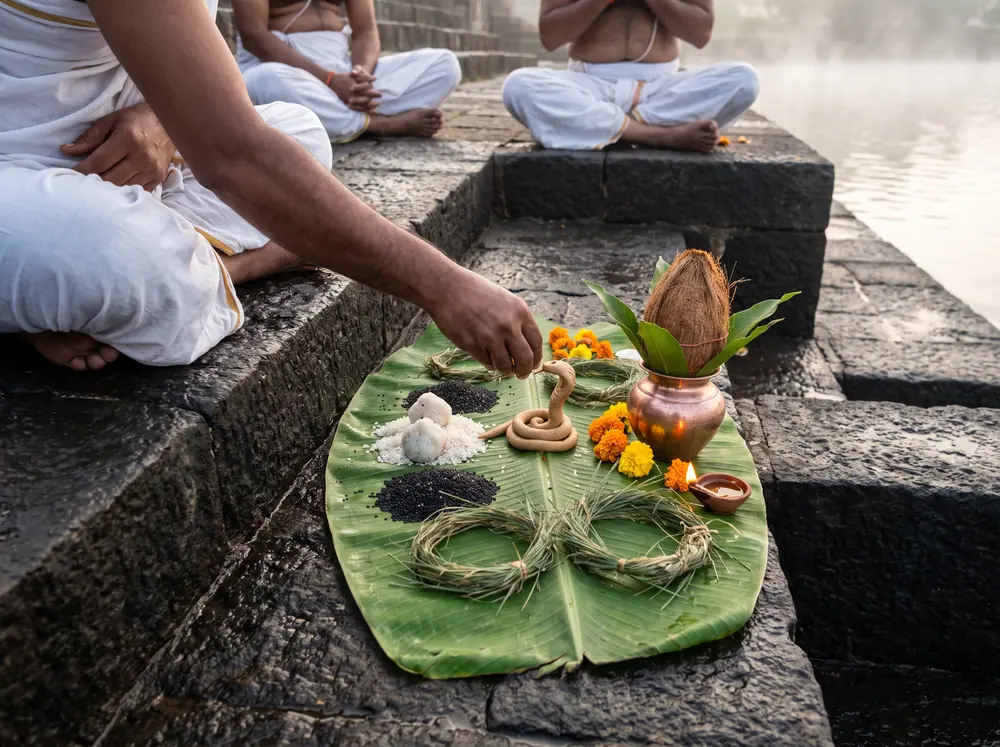
Narayan Nagbali Pooja
A three-day Vedic rite performed at Trimbakeshwar for the peace of family members who died untimely deaths, and as atonement for harm done to a serpent.
- 3 Days
- Book at least 5 days ahead
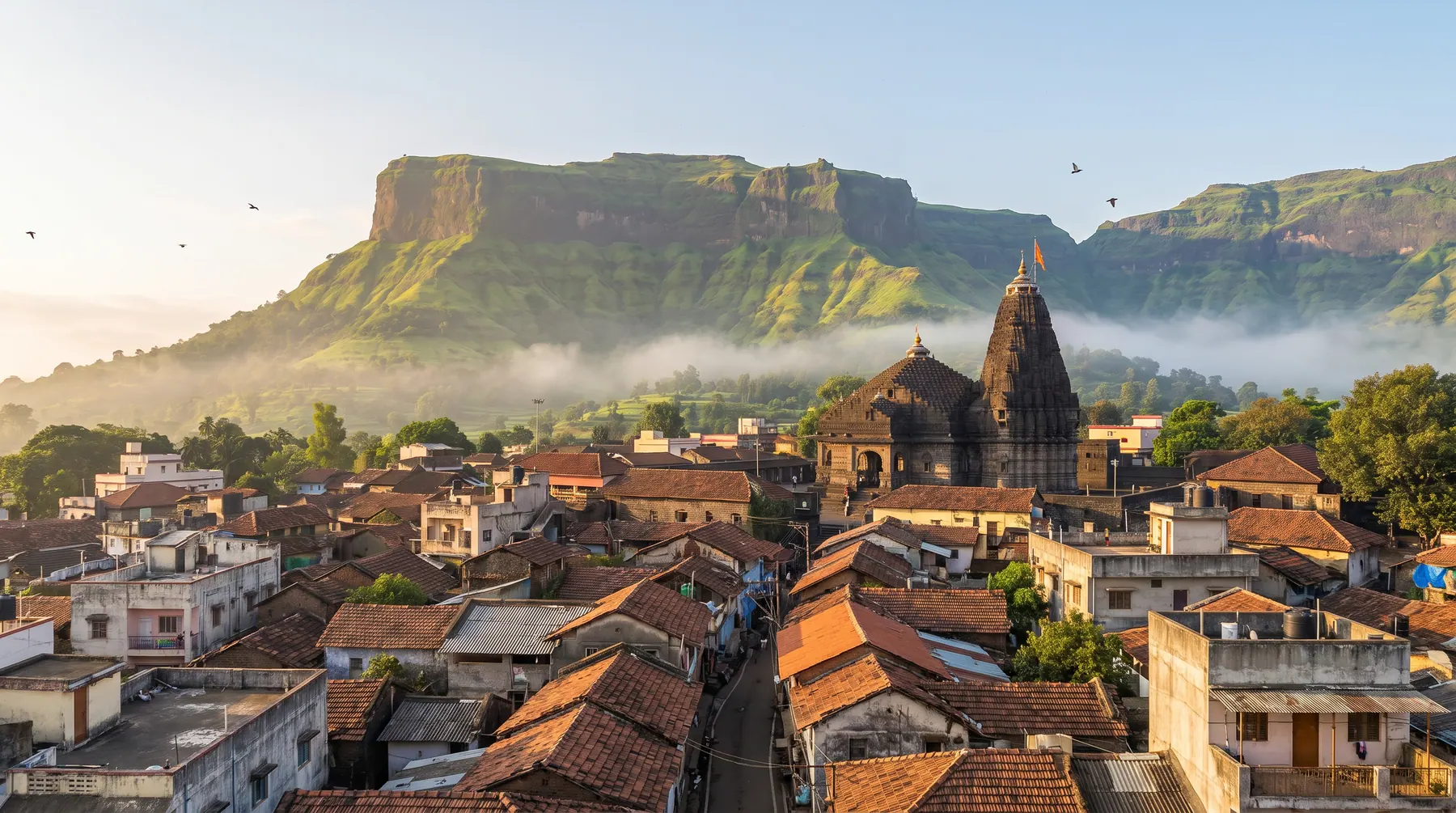
Trimbakeshwar (also written Trimbak or Tryambakeshwar) is a temple town at the foot of the Brahmagiri hills in Nashik district, Maharashtra, about 28 to 30 km from Nashik. It is one of the twelve Jyotirlingas of Lord Shiva, the place where the Godavari rises, and one of India's foremost centres for ancestral rites. This page brings together what a devotee needs to know.
A Jyotirlinga is a "linga of light", one of the shrines where, according to the Shiva Purana, Shiva revealed himself as an endless column of light. Trimbakeshwar is one of the twelve, remembered in the Dvadasha Jyotirlinga hymn as Tryambakam Gautami-tate, Tryambaka on the banks of the Gautami (the Godavari).
Its linga is distinctive. Rather than a single raised linga, the sanctum holds a small hollow in which three small lingas, or faces, are worshipped, representing Brahma, Vishnu and Shiva. Water is traditionally said to well up within it. The name Tryambaka means "the three-eyed one", the same name that opens the Maha Mrityunjaya mantra.
The present temple, built of dark basalt, was constructed under the third Peshwa, Balaji Bajirao (Nanasaheb Peshwa), on the site of an older shrine. According to the Shri Trimbakeshwar Devasthan Trust, it opened on Mahashivratri, 16 February 1756. Since 1954 the temple has been run as a registered public trust, which manages darshan and temple rituals today.
Trimbak is also sacred to the Varkari tradition: Sant Nivruttinath, elder brother and guru of Sant Dnyaneshwar, took samadhi here, and a large yatra is held in his memory each year in the month of Paush. Read the full history.
A short walk from the temple, Kushavarta is the sacred tank regarded as the source of the Godavari. Its name is traditionally explained by the legend that Sage Gautama encircled the river here with kusha grass so that she would not vanish again. The present stone kund was built by Shrimant Sardar Raosaheb Parnerkar, Fadnavis of the Indore State. Most ritual days at Trimbakeshwar begin with a bath here, and during the Simhastha Kumbh the Shaiva akhadas take their holy bath at Kushavarta.
Behind the town rises Brahmagiri, about 1,295 m high, the hill where, according to legend, Sage Gautama prayed for the Ganga to descend. She came down as the Godavari, India's second-longest river, which flows about 1,465 km east to the Bay of Bengal and is revered as Dakshin Ganga. Pilgrims climb to the river's source on the hill and to Gangadwar, and in Shravan thousands walk barefoot around Brahmagiri in a long pradakshina. Read about Brahmagiri · Read about the Godavari.
Because of its sacred geography, Trimbak has long been a centre of pitru karya (ancestral rites) and of Shiva worship. The rites most associated with it are:
Not sure which rite fits your situation? Compare Narayan Nagbali and Tripindi Shraddha, or simply call us.
Nashik and Trimbakeshwar host the Simhastha Kumbh Mela, held when Jupiter is in Simha (Leo), roughly once in twelve years. The current Simhastha period formally began with the flag hoisting on 31 October 2026. The main Amrit Snan days announced are 2 August 2027 and 31 August 2027, with the final bath in mid-September 2027 (reports give 11 September for Nashik and 12 September for Trimbakeshwar). At Trimbak, the Shaiva akhadas bathe at Kushavarta. Reports indicate the period closes in July 2028.
If you are planning a pooja during this period, book early, expect heavy crowds and traffic restrictions around the bathing days, and check official announcements for the latest arrangements.
More detail: A pilgrim's guide · Planning your pooja trip.
Most booked
Dakshina₹5,100
A three-day Vedic rite performed at Trimbakeshwar for the peace of family members who died untimely deaths, and as atonement for harm done to a serpent.
 Most booked
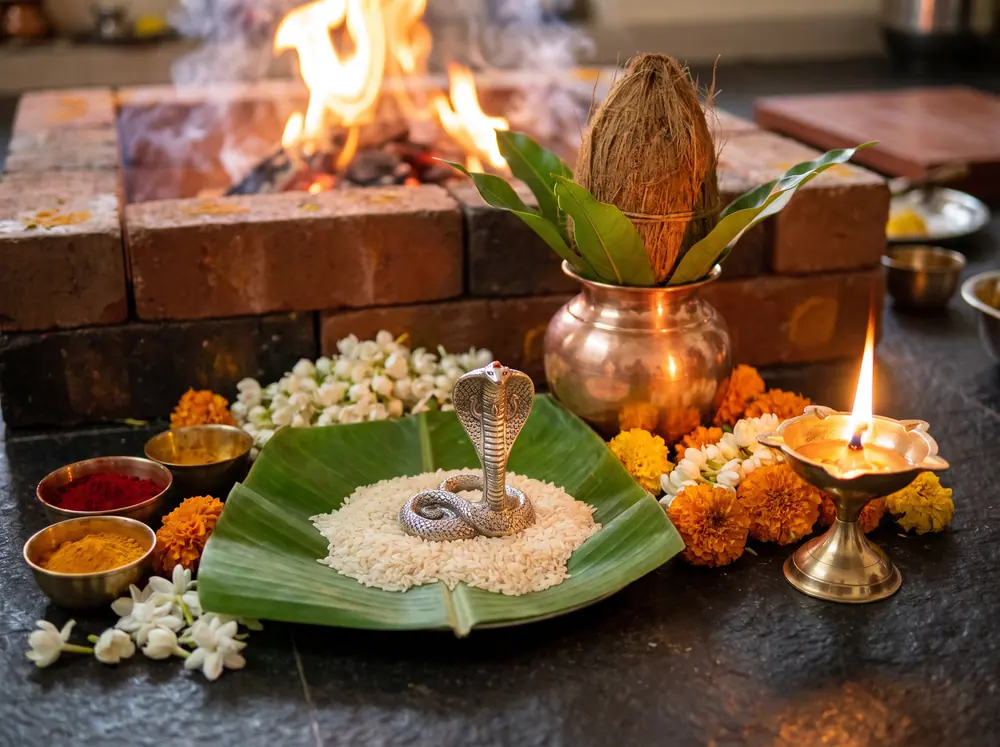
Dakshina₹2,500
A single-day shanti pooja at Trimbakeshwar, traditionally performed by those whose horoscope shows Kaal Sarp Yoga, with worship of the Nagas, Rahu-Ketu and Lord Shiva.
 Most booked
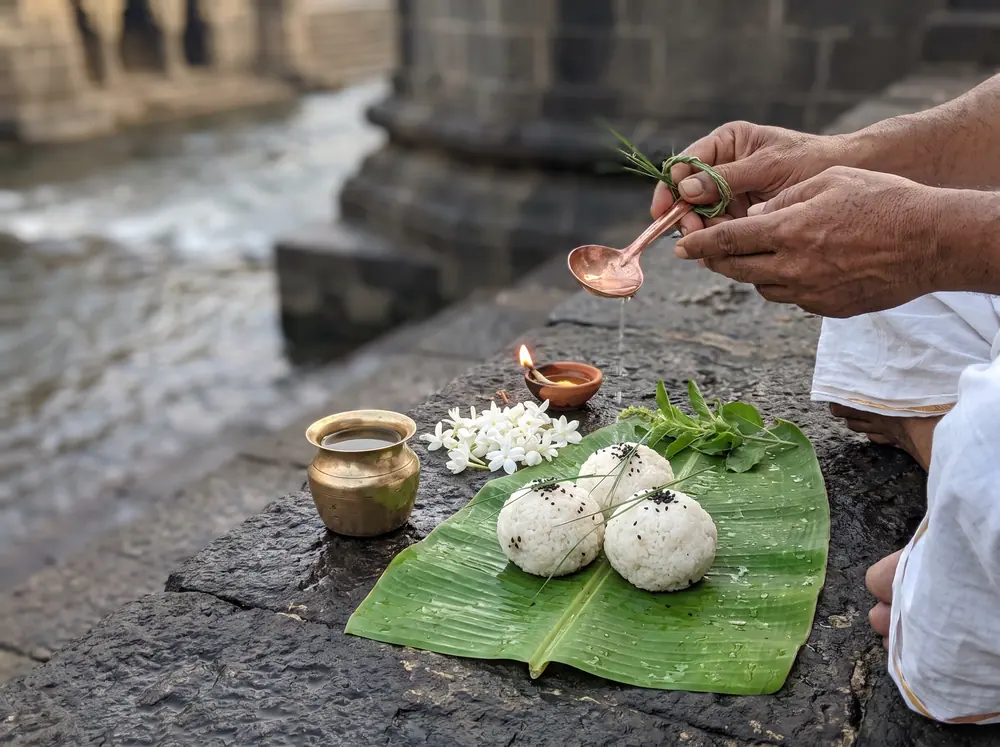
Dakshina₹2,500
A one-day shraddha at Trimbakeshwar in which three pindas are offered for ancestors of the past three generations, especially where regular shraddha has been missed.
 Most booked
Dakshina₹2,500
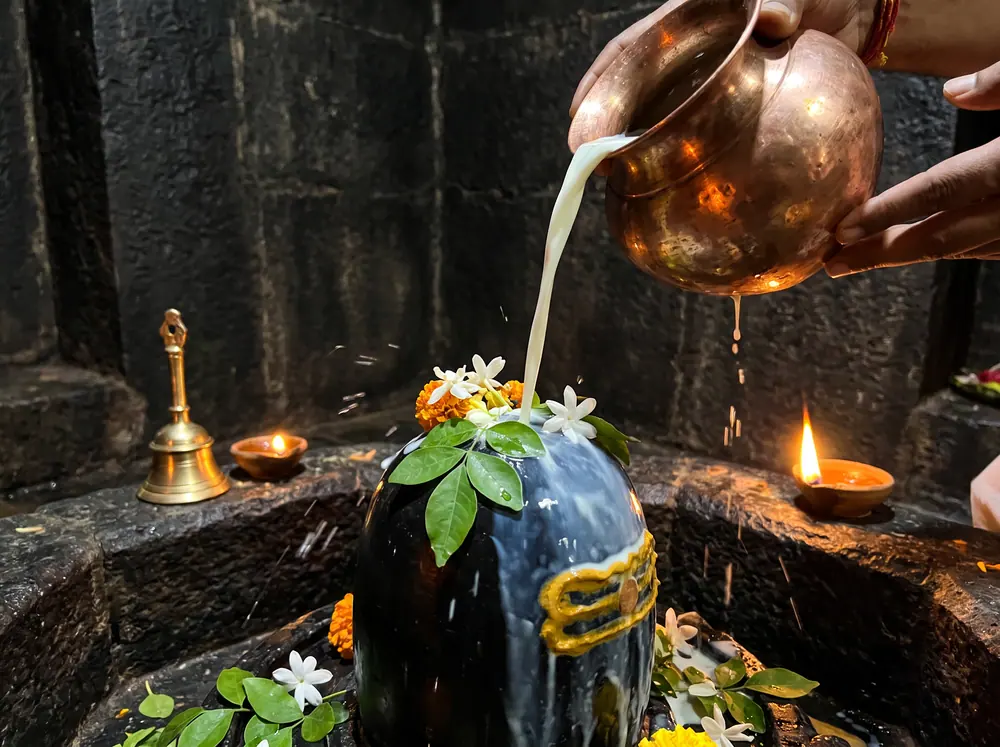
A short, beautiful act of worship in which Lord Shiva is bathed with milk, water and sacred offerings while the pandits chant the Rudra mantras of the Yajurveda.
 Dakshina₹11,000
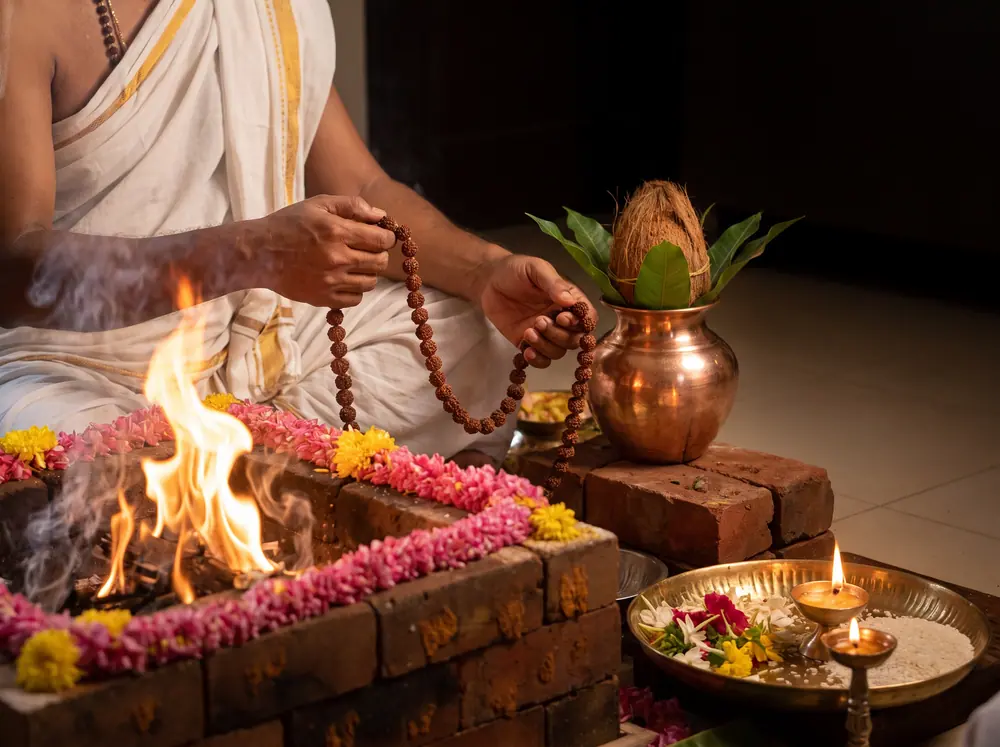
Repeated chanting of the Maha Mrityunjaya mantra by our pandits, with sankalp in your name and a concluding havan, offered to Lord Shiva for health, protection and peace.
 Dakshina₹4,500
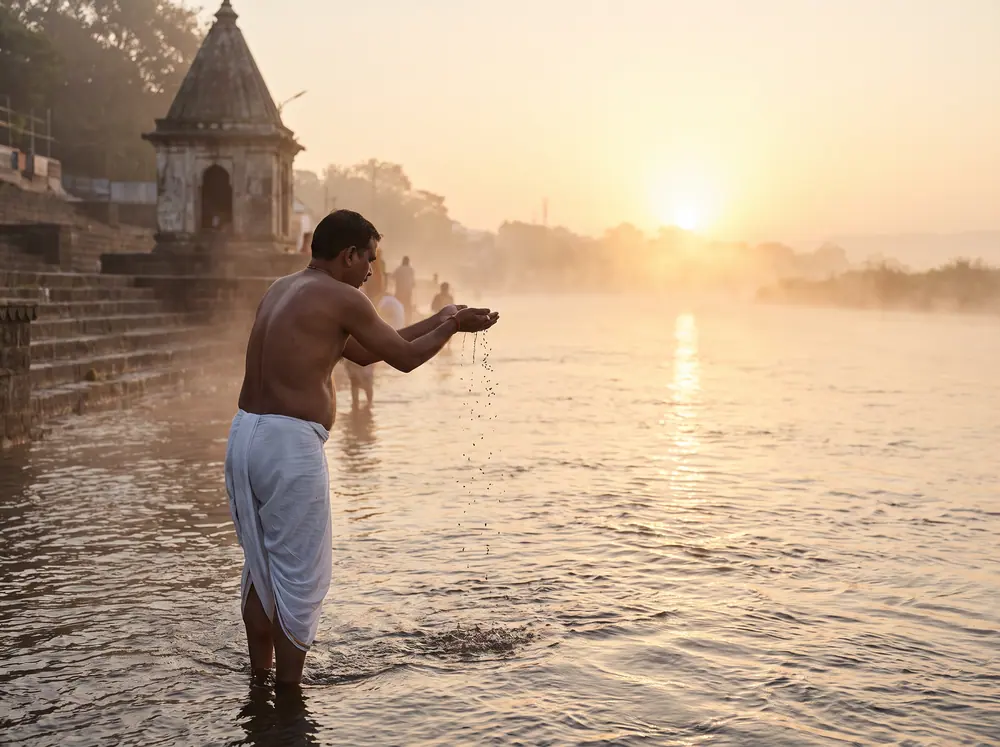
A half-day pooja at Trimbakeshwar honouring the ancestors through tarpan, pind daan and prayers, traditionally performed when Pitru Dosh has been indicated.
About 28 to 30 km by road, usually under an hour's drive.
Its linga is traditionally described as having three faces, representing Brahma, Vishnu and Shiva, and it stands at the source of the Godavari, which makes it a major centre for ancestral rites.
Narayan Nagbali, Kaal Sarp Shanti and Tripindi Shraddha are the best known, along with Pitru Dosh Nivaran, Rudrabhishek, Laghu Rudra, Maha Rudra, Maha Mrityunjaya Jaap and Satyanarayan Pooja.
The current Simhastha period began on 31 October 2026, with the main Amrit Snan days announced for August and September 2027. Check official announcements for final arrangements.
Yes, the temple is open every day of the year. Darshan timings are set by the temple trust and can change on festival days, so check before you go.
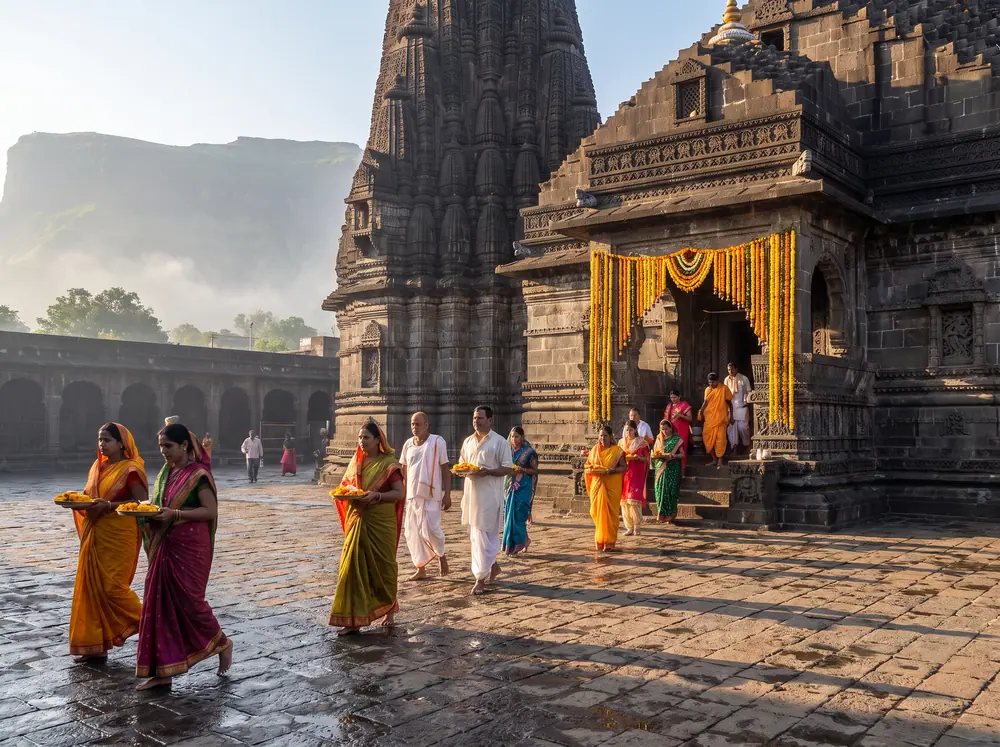
From the legend of Sage Gautama to the Peshwa-era temple of black stone: how Trimbakeshwar, one of the twelve Jyotirlingas, came to be what it is today.
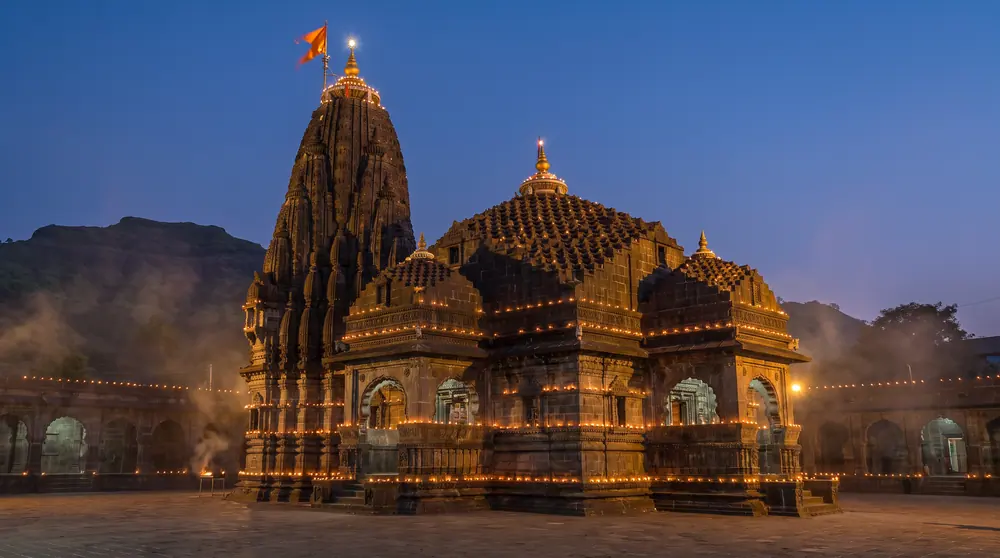
The meaning of a Jyotirlinga, the story of Shiva's pillar of light, the twelve shrines, and why Trimbakeshwar holds a special place among them.
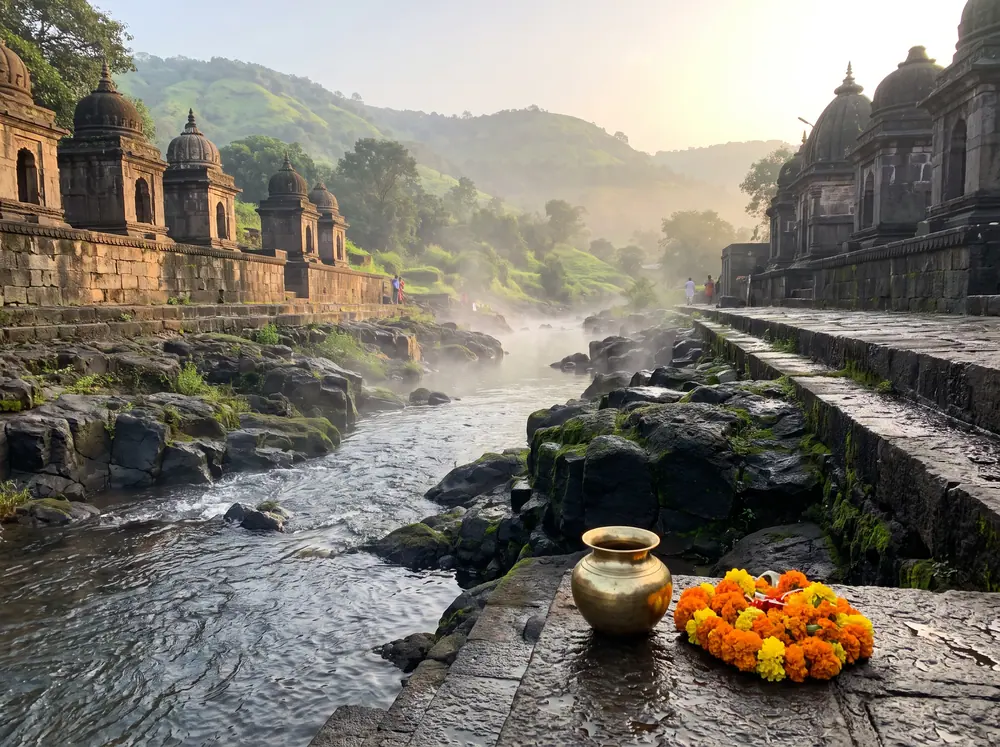
How the Godavari, the Ganga of the South, rises on Brahmagiri: the legend of Sage Gautama, Gangadwar, Kushavarta Tirth, and the river's long journey to the sea.
Choose your languageअपनी भाषा चुनें
You can change it any time from the top of the page. आप इसे कभी भी पृष्ठ के ऊपर से बदल सकते हैं।