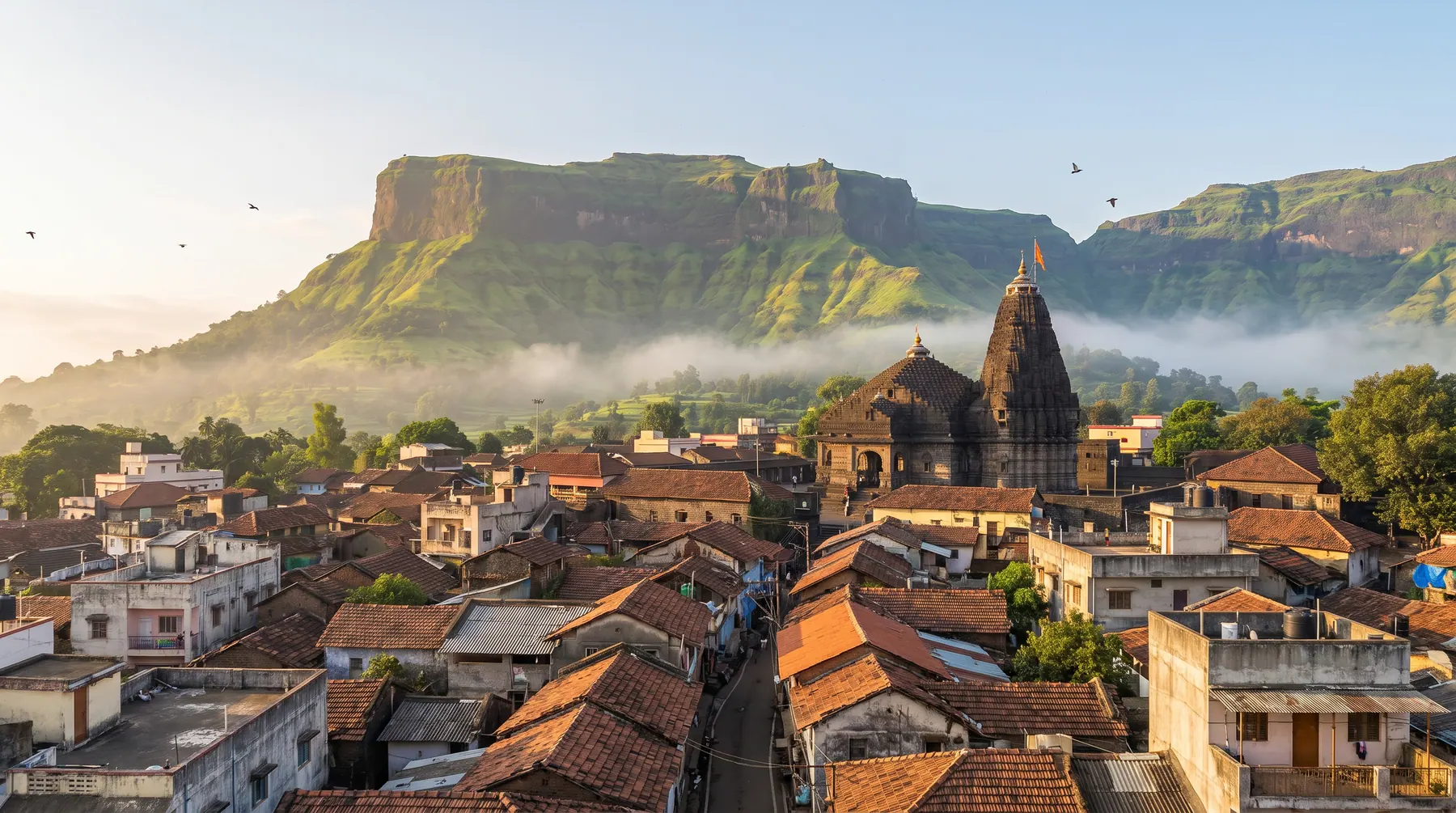
Most families who come to Trimbakeshwar for a pooja are travelling from another city, often with elders, sometimes with children, and usually with a little anxiety about getting everything right. A simple plan takes away most of that worry. This guide covers how to reach Trimbak, how long to stay, where to stay and eat, what to pack, and what the day of the pooja is like.
Where Trimbakeshwar is
Trimbakeshwar (also written Trimbak or Tryambakeshwar) is a temple town in Nashik district, Maharashtra, at the foot of the Brahmagiri hills. It is about 28 to 30 km from Nashik city, usually a drive of under an hour. Our address is 131a, near Kushawart Tirth, Panch Aali, Trimbak, Maharashtra 422212.
Getting there
By road. Trimbak is connected to Nashik by a good road. State transport buses run regularly from Nashik, and taxis and app-based cabs are available. From Mumbai, the usual route is by highway towards Nashik and then on to Trimbak; the drive from Mumbai's airport is roughly 200 km, and travel time depends heavily on traffic and weather.
By rail. The main railway station for the area is Nashik Road, which has good connections from Mumbai, Pune and many cities across India. From the station, take a taxi, or travel to Nashik's central bus stand for a bus to Trimbak.
By air. Nashik has an airport at Ozar with a limited number of domestic flights. Many travellers fly into Mumbai and continue by road. Check current flight options before you plan.
How many days to plan
- Rudrabhishek or Satyanarayan Pooja: these can fit into a day trip from Nashik, though staying overnight makes the day more relaxed.
- Kaal Sarp Shanti, Tripindi Shraddha, Pitru Dosh Nivaran, Laghu Rudra: arrive the evening before, perform the pooja the next morning, and keep the rest of that day free.
- Narayan Nagbali: plan to stay in Trimbak for all three days of the rite, arriving the evening before Day 1.
- Maha Mrityunjaya Jaap and Maha Rudra: these run over several days; we will agree a schedule with you.
A good rule: never plan a long drive straight after a ritual. Give yourself time for darshan, a meal and rest.
Where to stay
Trimbak has a range of simple accommodation: lodges, guest houses, dharmashalas run by community and religious organisations, and devotee accommodation run by the temple trust. Nashik, about an hour away, has a much wider choice of hotels. For early-morning rituals, staying in Trimbak itself is more convenient.
- Book early for Shravan, Mahashivratri, long weekends and the Simhastha period.
- Ask about hot water, lifts and ground-floor rooms if you are travelling with elders.
- Walking distance helps. Most rituals begin with a bath at Kushavarta in the town centre, so somewhere close to it saves effort in the morning.
We are happy to share general guidance on areas to stay when you book.
Food
Simple vegetarian meals are easy to find in Trimbak. Before and during ancestral rites, many families keep to sattvic food, avoiding onion, garlic, non-vegetarian food and alcohol; each pooja page on our site gives guidance. If anyone in your group has diabetes or another health condition, plan their meals and medicines around the ritual timings and follow their doctor's advice.
Weather and seasons
- Monsoon (roughly June to September): heavy rain in the Ghats; roads can be slow and the hills slippery. Carry umbrellas and allow extra travel time.
- Winter (roughly November to February): cool and pleasant; early mornings can be chilly, so carry a light shawl for the bath at Kushavarta.
- Summer (roughly March to May): hot in the afternoons; mornings are comfortable for rituals.
The Simhastha Kumbh: an important note
Nashik and Trimbakeshwar host the Simhastha Kumbh Mela, roughly once in twelve years. The current Simhastha period formally began with the flag hoisting on 31 October 2026, and the main Amrit Snan days have been announced for 2 August and 31 August 2027, with a final bath in mid-September 2027. Around these dates you should expect:
- very heavy crowds and long darshan queues,
- traffic diversions and restricted vehicle entry,
- scarce and expensive accommodation.
If your pooja date is flexible, avoid the main bathing days and the days immediately around them. If you specifically wish to come during the Kumbh, plan and book much earlier than usual, and keep your schedule flexible. Please check official announcements for the latest dates and arrangements.
What to pack
- Photo ID for every adult.
- Traditional clothes for the ritual, as described on your pooja page (for ancestral rites, white or light colours; avoid black).
- A change of clothes and a small towel for the bath at Kushavarta.
- Names and gotra of family members and ancestors, written down.
- Medicines, water bottle, a small snack for elders and children.
- Umbrella in the monsoon; shawl in winter.
- Some cash for small offerings, in addition to UPI.
What to expect on the day
- Early start. We will tell you the reporting time on WhatsApp. Most rituals start in the morning.
- Bath at Kushavarta. A dip or a sprinkling of the sacred water, then a change into ritual clothes.
- Sankalp. The pandit helps you state your name, gotra and the purpose of the pooja.
- The pooja. The pandit guides you step by step, telling you what to do and when. You do not need to know any mantras.
- Conclusion and darshan. After the pooja, many families take darshan at the temple. Allow extra time on Mondays and festival days.
Phones should be on silent during the ritual. Children are welcome; if a little one gets restless, it is fine for a family member to step out with them.
For elders and those with limited mobility
There are steps at Kushavarta and in parts of the temple, and queues can be long. Tell us in advance if anyone in your group has difficulty walking or sitting on the floor for long periods, so that we can plan breaks and, where possible, seating.
Before you travel: a quick checklist
- Booking confirmed and date saved.
- Our phone and WhatsApp numbers saved: +91 9503367917 (phone) and +91 9422267917 (WhatsApp).
- Travel and stay booked, arriving the evening before.
- Clothes, ID and names packed.
- Anything personal (sutak, periods, pregnancy, health) shared with us privately.
With these in place, you can arrive in Trimbak with a quiet mind and give your full attention to the reason you came. If anything is unclear, call or message us. We would rather answer ten questions before you travel than have you worry on the day.
Planning Narayan Nagbali Pooja? See dakshina, duration and open dates.
View detailsMore guides
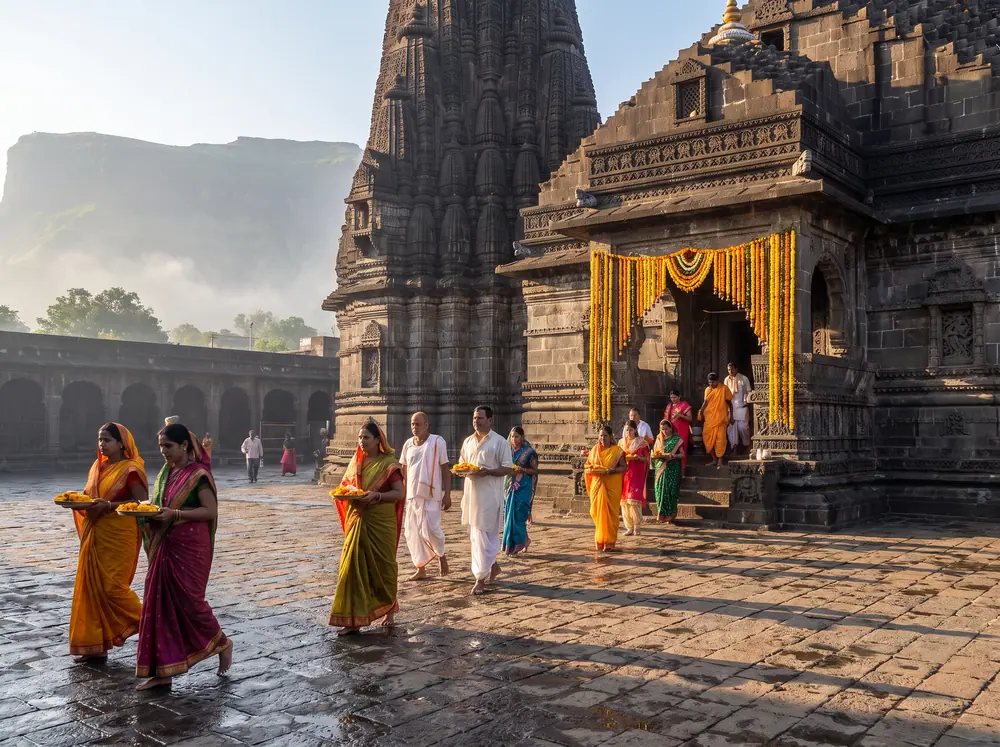
The History of Trimbakeshwar Temple
From the legend of Sage Gautama to the Peshwa-era temple of black stone: how Trimbakeshwar, one of the twelve Jyotirlingas, came to be what it is today.
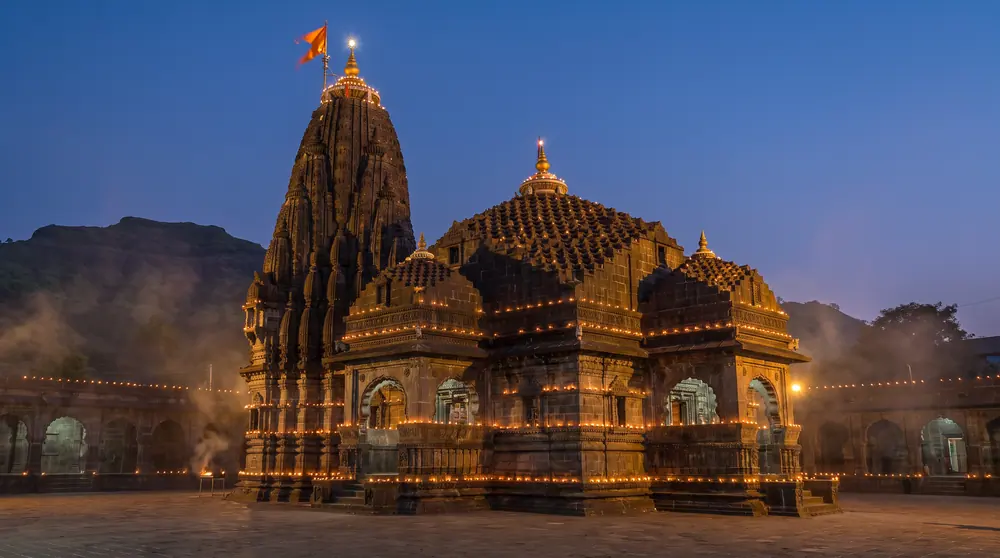
What Is a Jyotirlinga? Trimbakeshwar's Place Among the Twelve
The meaning of a Jyotirlinga, the story of Shiva's pillar of light, the twelve shrines, and why Trimbakeshwar holds a special place among them.
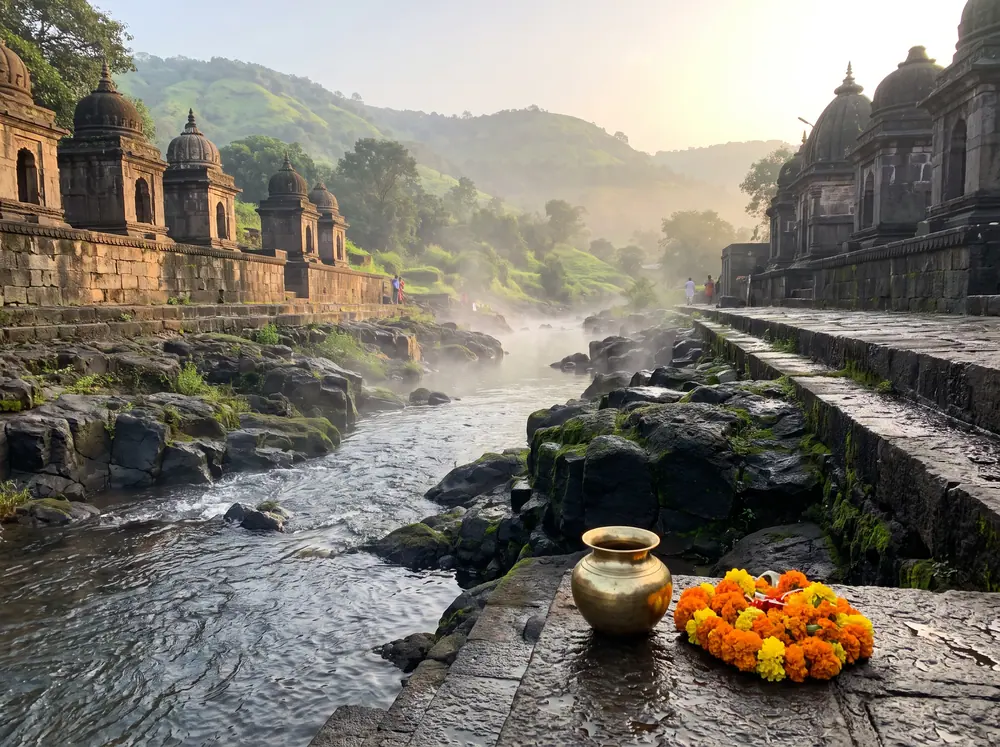
The Origin of the Godavari at Trimbakeshwar
How the Godavari, the Ganga of the South, rises on Brahmagiri: the legend of Sage Gautama, Gangadwar, Kushavarta Tirth, and the river's long journey to the sea.