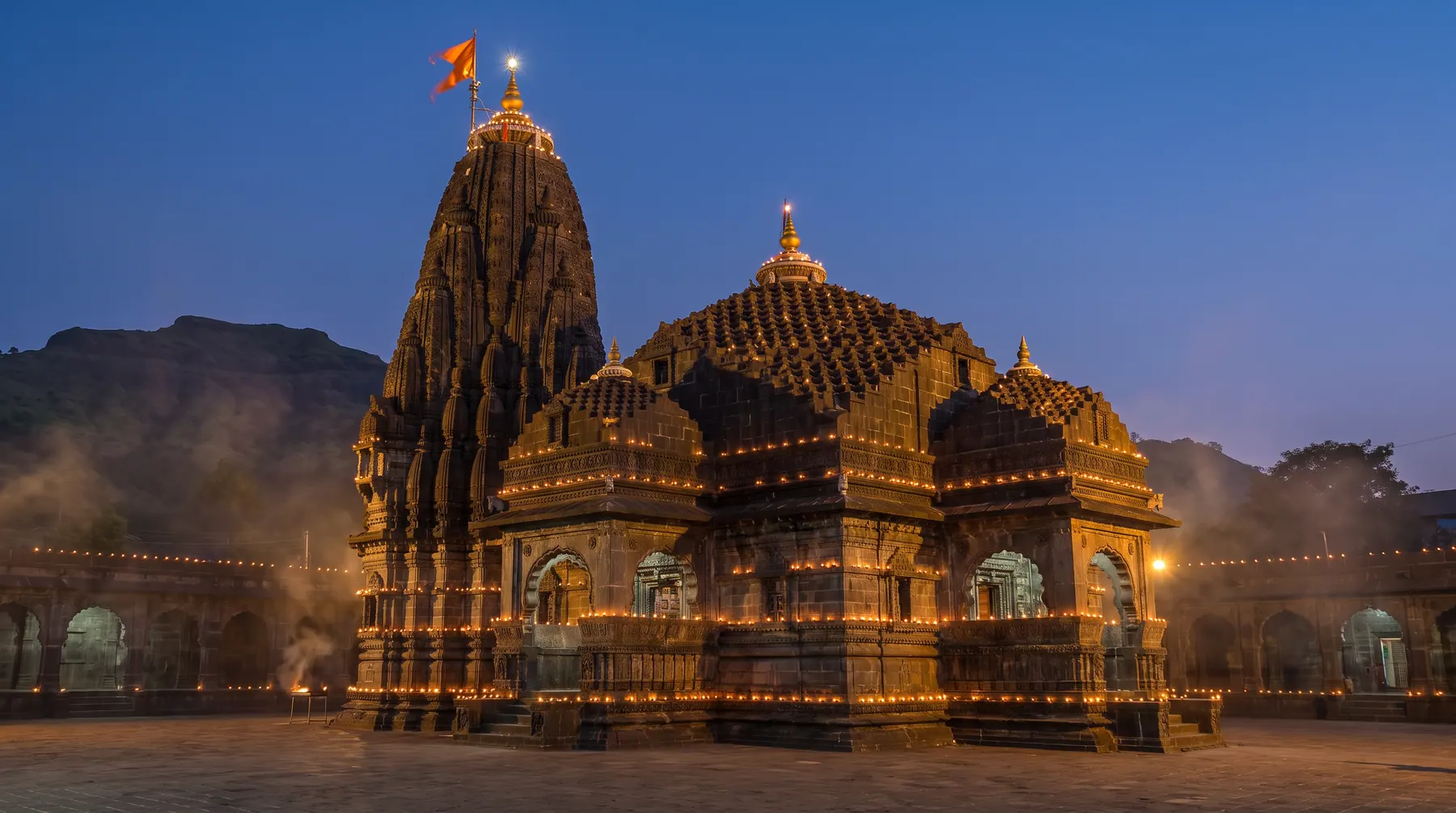
Across India, twelve Shiva temples are honoured above others as Jyotirlingas. Pilgrims dream of visiting all twelve, and many families plan a lifetime of journeys around them. Trimbakeshwar, near Nashik, is one of the twelve, and it has features found at no other. This article explains what a Jyotirlinga is, tells the story behind the idea, and describes what makes Trimbakeshwar distinctive.
What the word means
Jyotirlinga joins two Sanskrit words: jyoti, radiance or light, and linga, a sign or mark. A Jyotirlinga is therefore a "linga of light": a place where, according to tradition, Shiva revealed himself as an endless column of light, and where that presence is believed to remain. The linga is not a statue of a figure. It is a sign of the formless, the Shiva who has no beginning and no end.
The story of the pillar of light
The best-known account of the idea comes from the Shiva Purana. Brahma, the creator, and Vishnu, the preserver, once argued over which of them was greater. To end the dispute, a vast pillar of fire and light appeared between them, piercing the three worlds. They agreed that whoever found its end would be the greater. Vishnu, taking the form of a boar, dug downwards; Brahma, as a swan, flew upwards. Neither found an end. Vishnu returned and honestly admitted it. Brahma claimed he had seen the top, offering a ketaki flower as false proof. Shiva then emerged from the pillar, revealing that he is beyond all limits. In the story, Brahma's untruth costs him worship, while Vishnu is honoured for his honesty.
The Shiva Purana speaks of many such manifestations, and twelve are considered especially holy. These are the twelve Jyotirlingas.
The twelve Jyotirlingas
The list most commonly given is:
- Somnath, Gujarat
- Mallikarjuna, Srisailam, Andhra Pradesh
- Mahakaleshwar, Ujjain, Madhya Pradesh
- Omkareshwar, Madhya Pradesh
- Baidyanath, Deoghar, Jharkhand
- Bhimashankar, Maharashtra
- Rameshwaram, Tamil Nadu
- Nageshwar, near Dwarka, Gujarat
- Kashi Vishwanath, Varanasi, Uttar Pradesh
- Trimbakeshwar, Nashik, Maharashtra
- Kedarnath, Uttarakhand
- Grishneshwar, near Ellora, Maharashtra
For a few of these, more than one temple holds a traditional claim; in Maharashtra, for example, Parli and Aundha are also revered in this connection. By the common list, Maharashtra is home to three of the twelve: Trimbakeshwar, Bhimashankar and Grishneshwar.
These shrines are remembered in a short Sanskrit hymn, the Dvadasha Jyotirlinga Smaranam, which devotees recite daily. Its line for Trimbakeshwar reads:
वाराणस्यां तु विश्वेशं त्र्यम्बकं गौतमीतटे Vishvesha at Varanasi, and Tryambaka on the banks of the Gautami.
The Gautami is the Godavari, named after the sage Gautama, whose penance, according to legend, brought the river down at Trimbak.
What makes Trimbakeshwar distinctive
The three faces. At most Jyotirlingas, Shiva is worshipped as a single linga. At Trimbakeshwar, the sanctum holds a small hollow in which three small lingas, or faces, are worshipped, representing Brahma, Vishnu and Shiva. The same three gods of the pillar story are honoured together here, which is why Trimbakeshwar is often described as a shrine of the whole Trimurti.
The source of a great river. Trimbakeshwar is associated with the origin of one of India's great rivers. The Godavari, India's second-longest river and revered as the Ganga of the South, rises on Brahmagiri above the town, and Kushavarta Tirth is regarded as its sacred source.
A centre of ancestral rites. Because of this sacred geography, Trimbak has for centuries been a centre of pitru karya, the rites for ancestors. Narayan Nagbali, Tripindi Shraddha and Kaal Sarp Shanti are especially associated with Trimbakeshwar, and the town's purohit families have preserved their procedures for generations.
A Kumbh Mela town. Nashik and Trimbakeshwar together host the Simhastha Kumbh Mela, roughly once in twelve years. Like Ujjain, Trimbak is both a Jyotirlinga and a Kumbh Mela site.
Why devotees visit the Jyotirlingas
For devotees, a Jyotirlinga is a place where Shiva's presence is felt with special closeness. People come to offer abhishek, to pray for their families, to fulfil vows, and to mark turning points in life. Many keep a lifelong wish to visit all twelve. There is no single rule about the order or the timing; what matters in the tradition is the devotion with which the journey is made.
Visiting Trimbakeshwar as a Jyotirlinga pilgrim
If you are visiting Trimbakeshwar as part of a Jyotirlinga journey, consider:
- Starting at Kushavarta with a bath or by sprinkling its water, as many pilgrims do.
- Allowing time for darshan. Queues can be long on Mondays, in Shravan, on Mahashivratri and during the Simhastha period.
- Offering a Rudrabhishek if you wish to take part in a proper Vedic worship; it takes about 30 to 40 minutes.
- Combining your visit with Bhimashankar and Grishneshwar, the other two Jyotirlingas in Maharashtra by the common list.
Whatever brings you here, we hope your darshan of Lord Tryambakeshwar is peaceful and full of meaning. If you would like to perform a pooja during your visit, our family is happy to guide you.
Planning Narayan Nagbali Pooja? See dakshina, duration and open dates.
View detailsMore guides
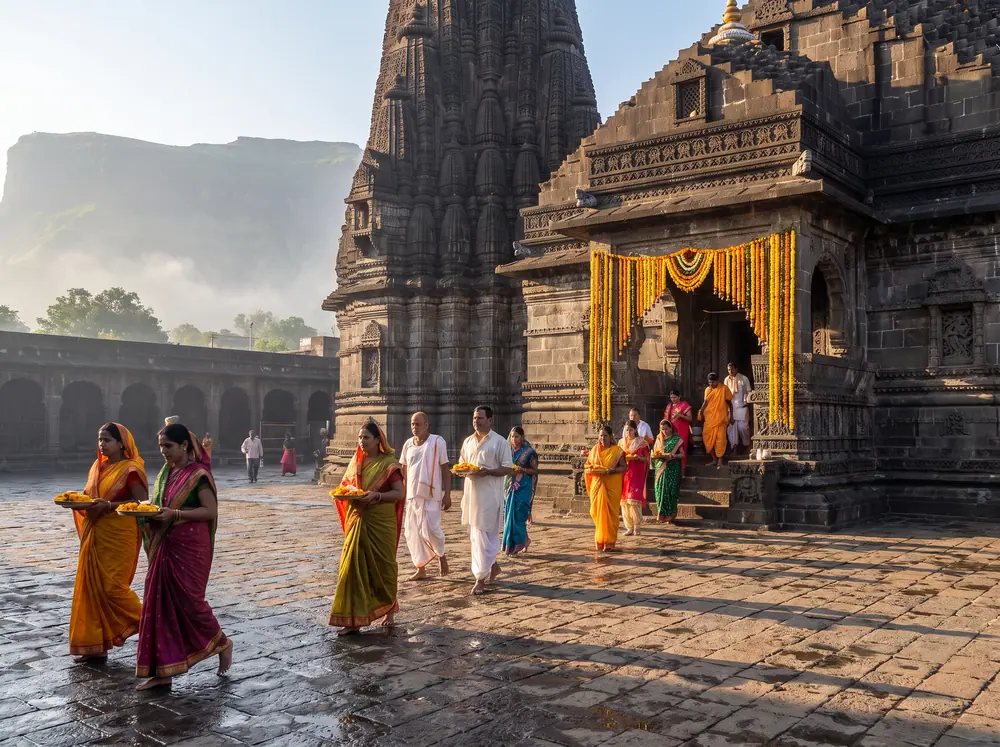
The History of Trimbakeshwar Temple
From the legend of Sage Gautama to the Peshwa-era temple of black stone: how Trimbakeshwar, one of the twelve Jyotirlingas, came to be what it is today.
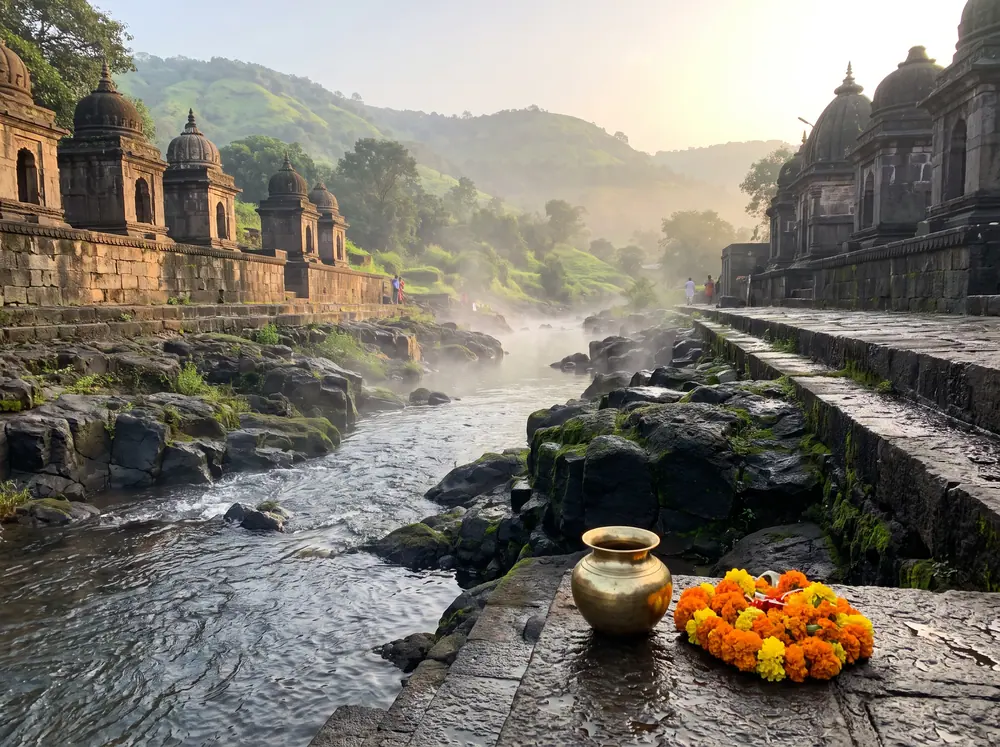
The Origin of the Godavari at Trimbakeshwar
How the Godavari, the Ganga of the South, rises on Brahmagiri: the legend of Sage Gautama, Gangadwar, Kushavarta Tirth, and the river's long journey to the sea.
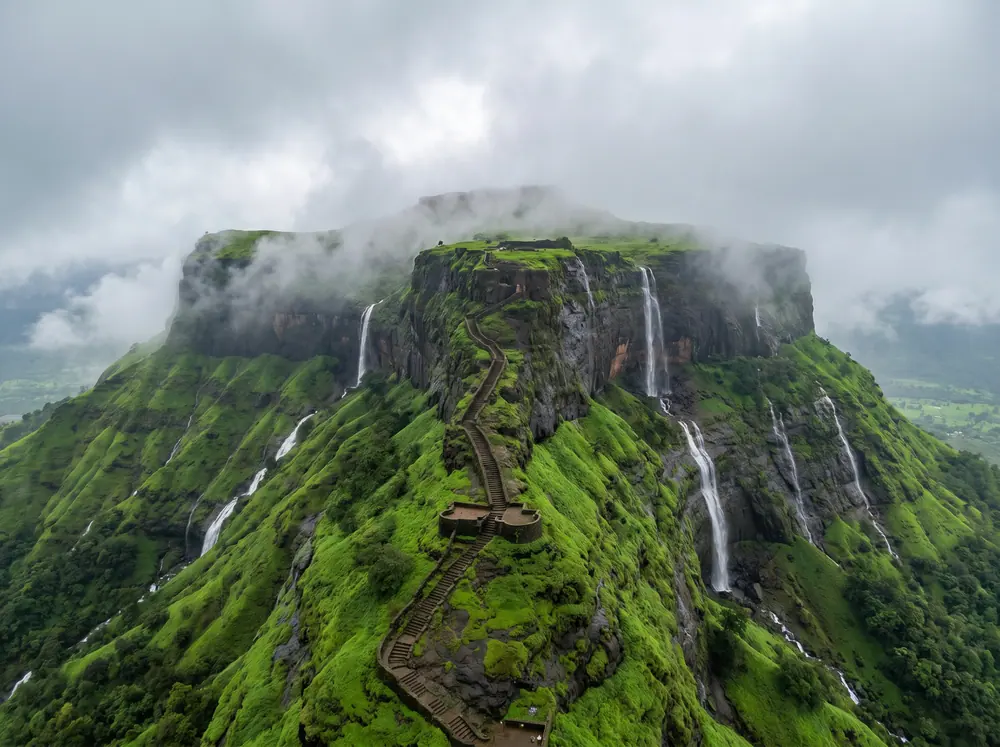
Brahmagiri: The Sacred Hill Above Trimbakeshwar
The hill of Brahma, source of the Godavari: its legends, the climb to the river's source and Gangadwar, the Shravan pradakshina, and how to visit safely.