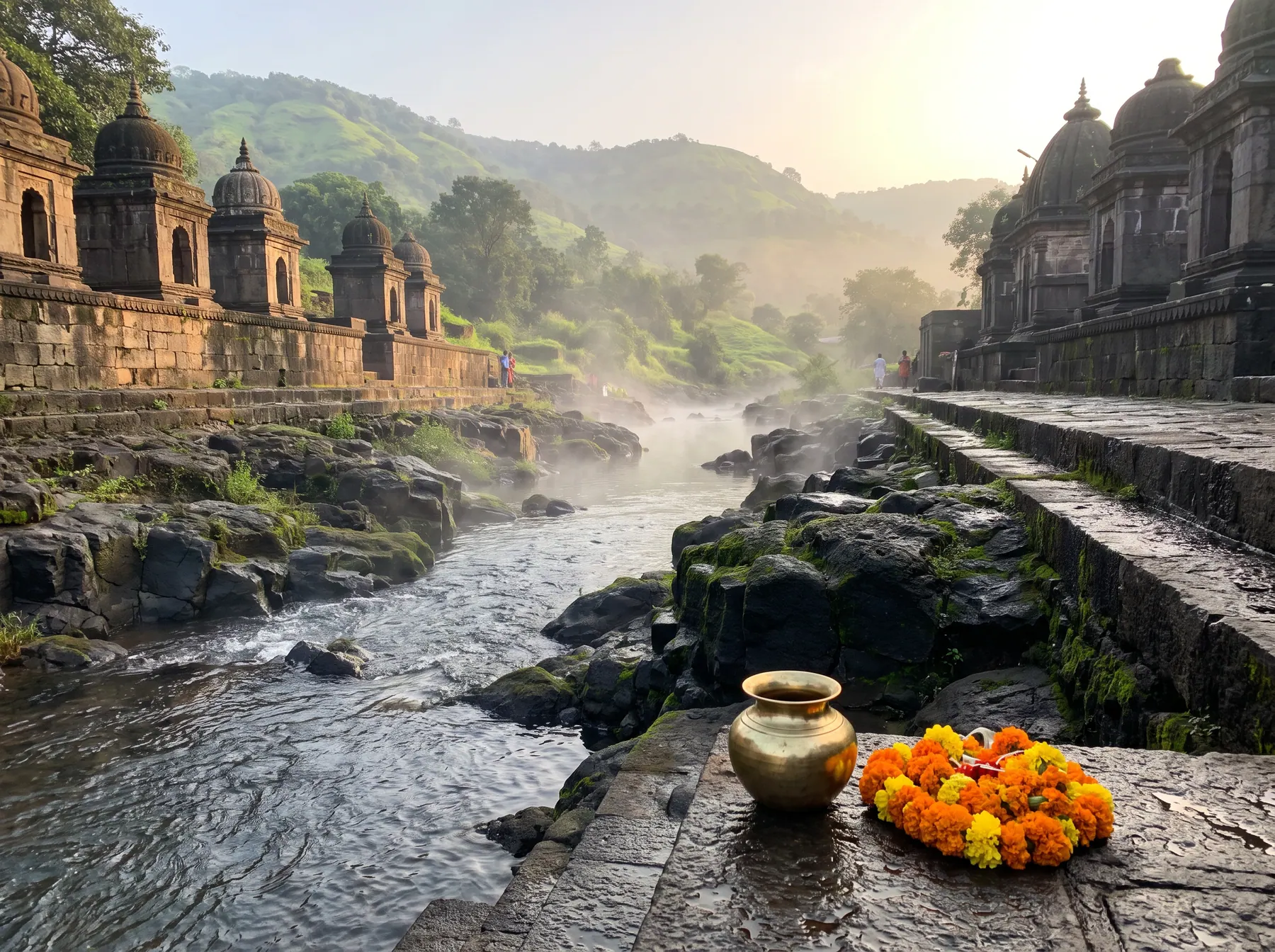
The Godavari is India's second-longest river, flowing about 1,465 km from the hills of Maharashtra to the Bay of Bengal. Because of its length, its vast basin and its sanctity, it has long been called Dakshin Ganga, the Ganga of the South. Its source lies on Brahmagiri, the hill that rises above Trimbakeshwar, and it is this sacred beginning that makes Trimbak one of the holiest places in India for bathing and for ancestral rites.
The legend of Sage Gautama
The Godavari's sacred story is told in the Gautami Mahatmya, traditionally included in the Brahma Purana, and in the living tradition of Trimbak. According to the legend, the sage Gautama lived on Brahmagiri with his wife Ahalya. During a terrible drought his hermitage alone had water and grain, and he fed everyone who came to him. Some versions say that jealous sages, or the gods themselves, set a test: a frail cow wandered into Gautama's field, and when he tried to drive it away with a blade of grass, it fell dead.
Though he had meant no harm, Gautama accepted the fault of go-hatya, the death of a cow. To purify himself and the land, he performed long penance to Shiva and prayed that the Ganga, who flows from Shiva's matted locks, would come down to Brahmagiri. Pleased, Shiva released her. The river that flowed from the hill became the Godavari, and after the sage she is also called the Gautami.
Why it is called Kushavarta
The legend continues that the river, newly released, kept vanishing into the hillside and reappearing further down. Gautama followed her, and at the foot of the hill he encircled the stream with kusha grass, asking her to stay. Bound by the kusha, she remained, and Gautama bathed in her waters and completed his atonement. This is the traditional explanation of the name Kushavarta: the place where the river was encircled with kusha. Tradition honours it as tirtha-raja, the king of sacred bathing places.
Where the river actually rises
On the ground, the Godavari's beginnings are spread across Brahmagiri. Pilgrims visit the source high on the hill, where springs emerge among ancient fig trees, and Gangadwar, a shrine about halfway up a separate route, reached by a climb of several hundred steps. The water is said to disappear underground and re-emerge at several points, including small kunds on the hillside, before it gathers at Kushavarta Tirth in the town. From Kushavarta the river continues east. Hindu belief regards Kushavarta as the point of origin of the Godavari, and it is here that most pilgrims take their holy bath.
Brahmagiri is the source of other rivers too. The Vaitarna, which flows west to the Arabian Sea, rises very close to the Godavari's source, so that two rivers born almost side by side reach opposite coasts of India.
The river's journey
From Trimbak, the Godavari flows east across the Deccan plateau, through Nashik and on through Maharashtra, Telangana and Andhra Pradesh, with parts of its basin also in Chhattisgarh and Odisha. Near Rajamahendravaram it divides into two large branches, the Gautami Godavari and the Vasishta Godavari, before reaching the Bay of Bengal through a delta of distributaries. Along its banks lie great pilgrimage towns, and every twelve years the Pushkaram festival is held on its banks.
Why the source matters for rituals
In Hindu tradition, the source of a holy river is considered especially pure, and rites performed there are believed to carry special merit. This is one reason why Trimbakeshwar became a centre for pitru karya, the rites for the departed. Narayan Nagbali, Tripindi Shraddha and Pitru Dosh Nivaran all begin with a bath at Kushavarta and involve offerings in the river's sacred waters. The Simhastha Kumbh Mela, held at Nashik and Trimbakeshwar roughly once in twelve years, also centres on bathing in the Godavari; at Trimbak, the Shaiva akhadas take their holy bath at Kushavarta.
Visiting Kushavarta
- Go early. Mornings are calmer and most ritual days begin here.
- Bathe or sprinkle. Many pilgrims take a full dip; others, especially elders, simply sprinkle the water on their head. Both are acts of devotion.
- Bring a change of clothes if you plan to bathe, and a small towel.
- Respect the space. Kushavarta is a working sacred site: rituals are in progress around you, so keep your voice low and ask before photographing people.
- Keep the water clean. Please do not leave plastic, flowers in plastic bags, or soap in the kund.
Caring for the Goda
The people of Nashik often call the river by the affectionate name Goda. Like many rivers, she faces pressures from growing towns, and volunteers and local groups work to restore the springs and kunds on Brahmagiri. As pilgrims, the simplest thing we can do is to leave her cleaner than we found her.
When you take your first sip or your first dip at Kushavarta, you are touching a river at the very start of a 1,465 km journey across India, at the place where, according to tradition, the Ganga came down for the sake of a sage's atonement.
Planning Narayan Nagbali Pooja? See dakshina, duration and open dates.
View detailsMore guides
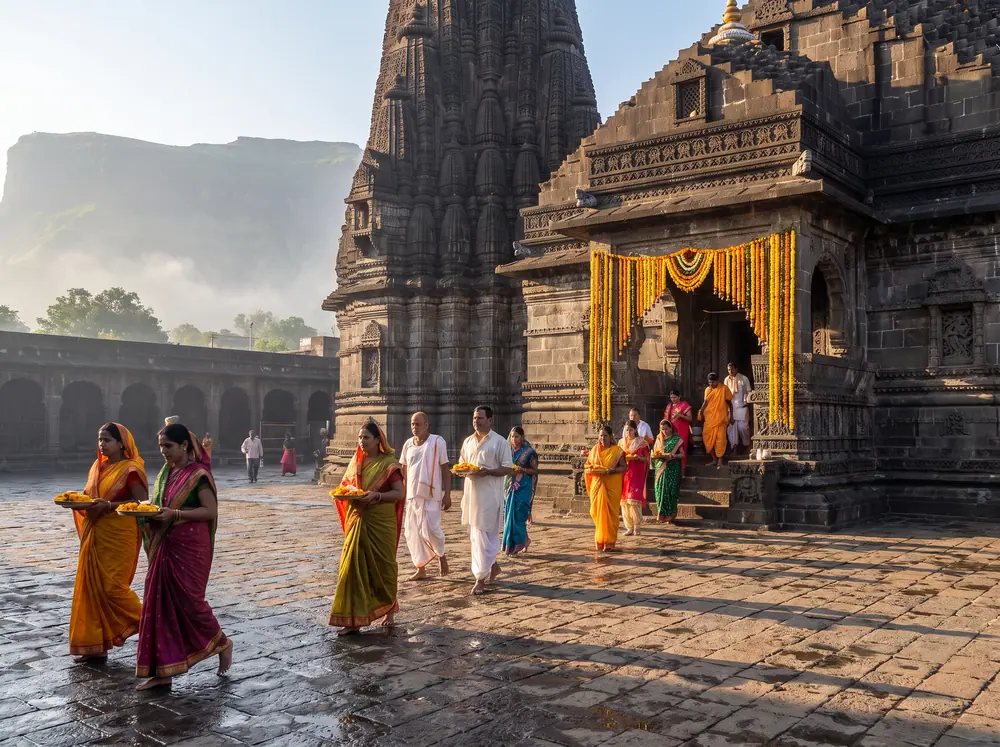
The History of Trimbakeshwar Temple
From the legend of Sage Gautama to the Peshwa-era temple of black stone: how Trimbakeshwar, one of the twelve Jyotirlingas, came to be what it is today.
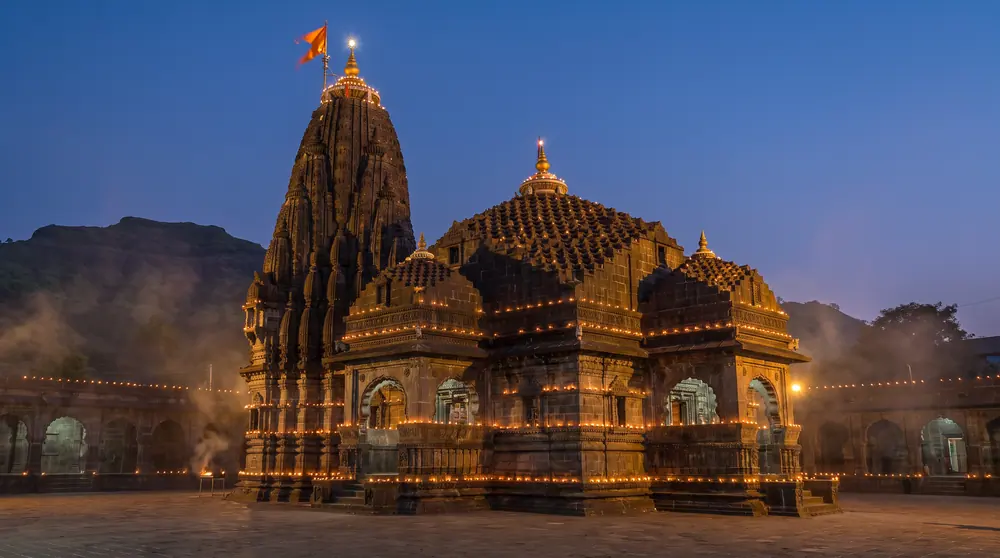
What Is a Jyotirlinga? Trimbakeshwar's Place Among the Twelve
The meaning of a Jyotirlinga, the story of Shiva's pillar of light, the twelve shrines, and why Trimbakeshwar holds a special place among them.
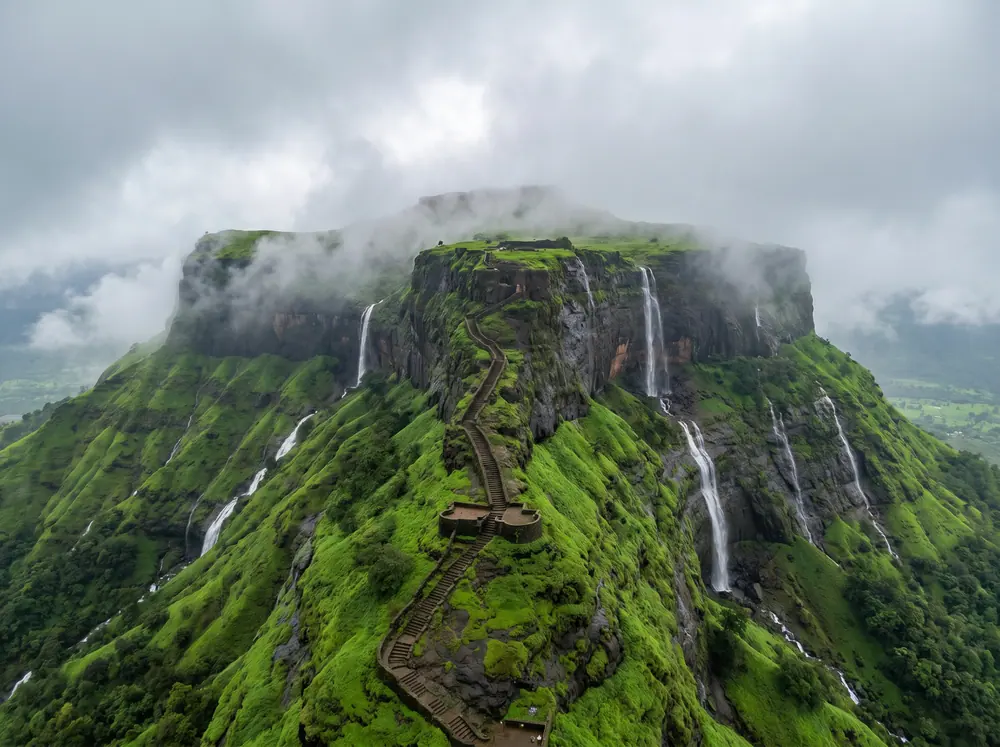
Brahmagiri: The Sacred Hill Above Trimbakeshwar
The hill of Brahma, source of the Godavari: its legends, the climb to the river's source and Gangadwar, the Shravan pradakshina, and how to visit safely.