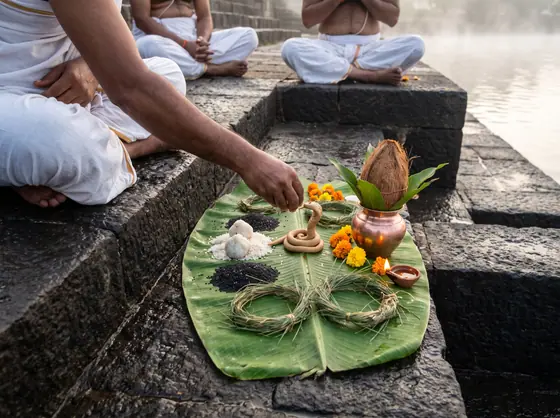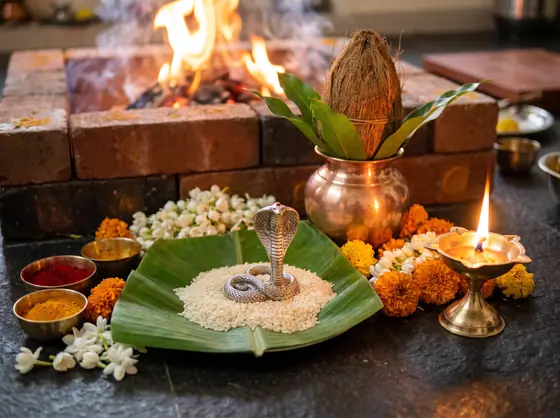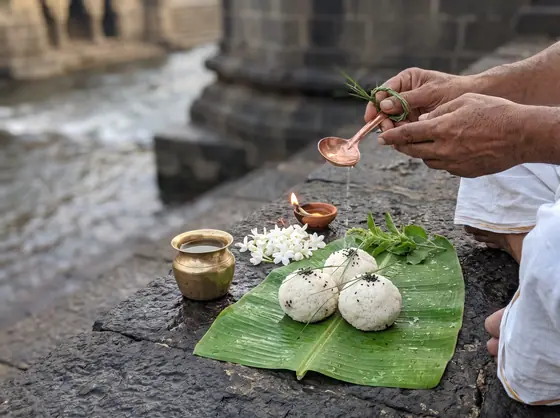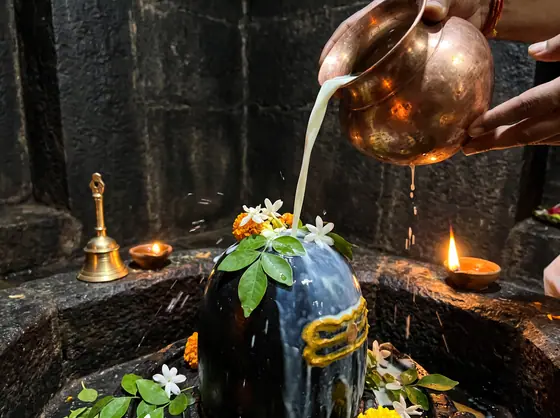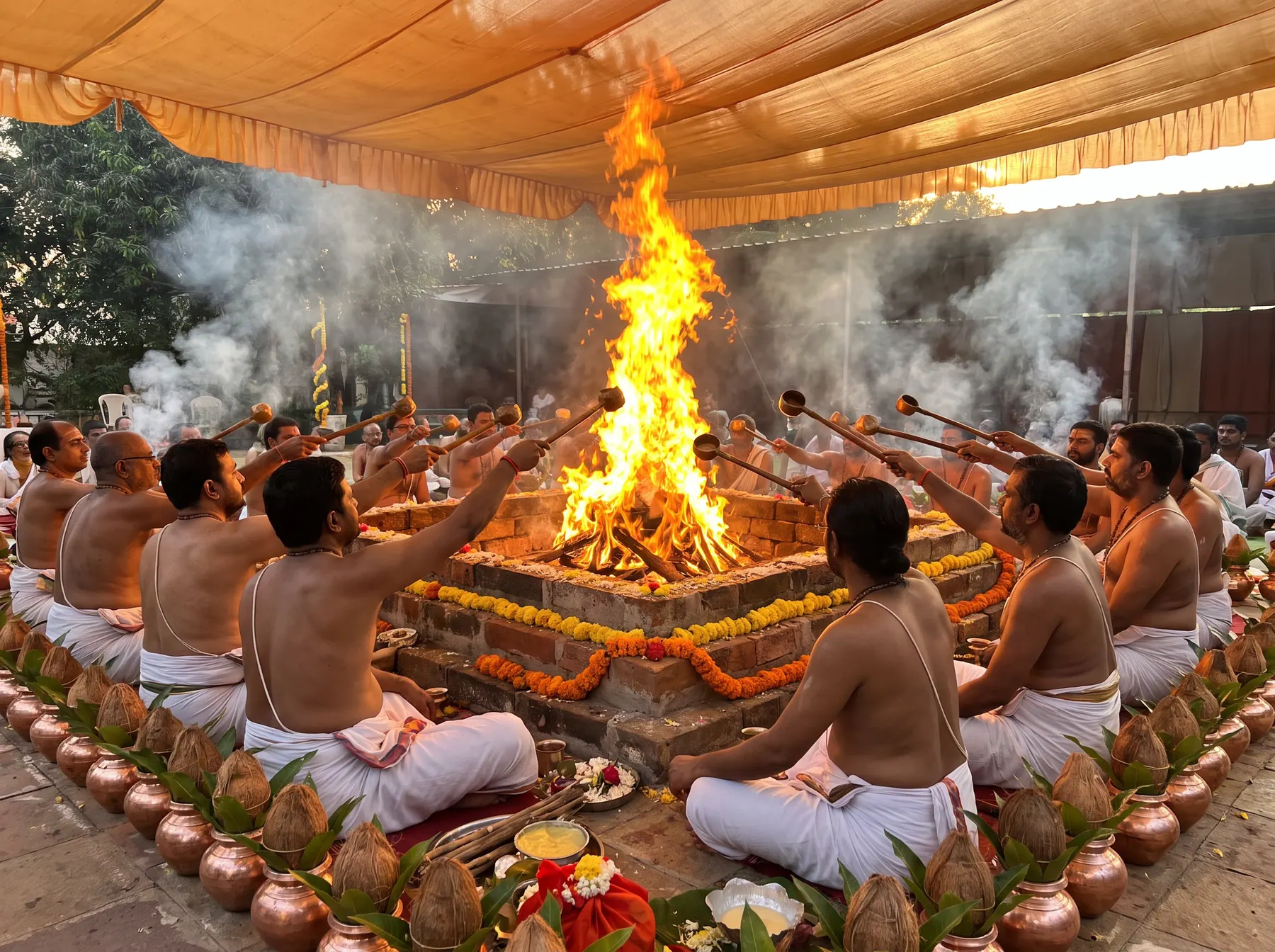
Maha Rudra is one of the grandest forms of Rudra worship. In the traditional reckoning it is eleven Laghu Rudras, which comes to 1,331 recitations of the Rudra, chanted by a team of pandits over several days with abhishek and havan, and concluding with a purnahuti.
A Maha Rudra is usually undertaken by a family, a group of families or a community for an occasion of real significance: a vow, a major milestone, the welfare of the family line or of a wider community. Because it involves many pandits and several days, it needs planning. We will sit with you well in advance to fix dates, explain the schedule and help your family plan its stay.
Why at Trimbakeshwar
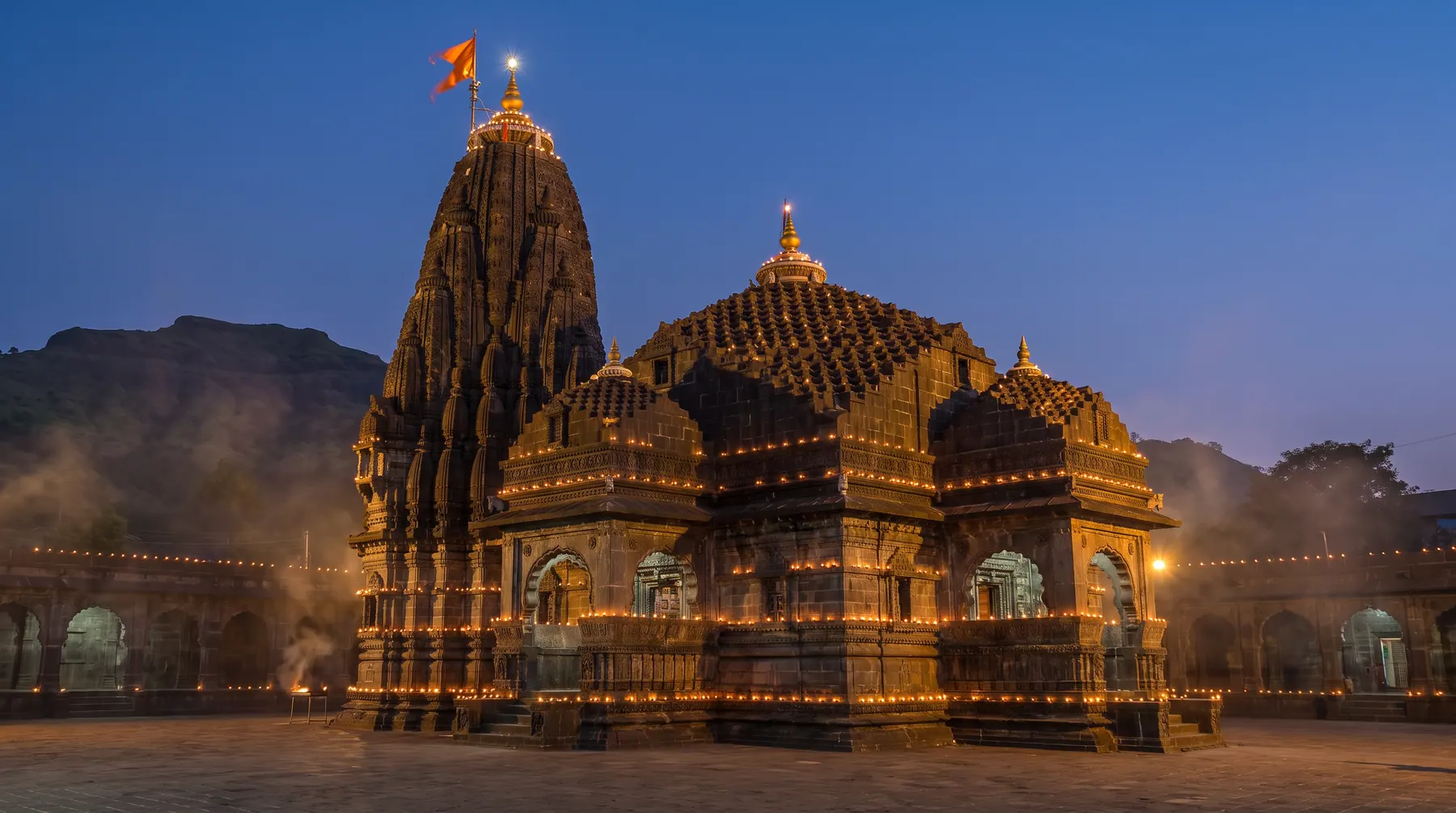
A Rudra yajna of this scale, performed in the town of the Tryambakeshwar Jyotirlinga beside the source of the Godavari, is for many families a once-in-a-lifetime offering. Trimbak's purohit families carry a long tradition of Vedic chanting, which makes it possible to bring together the team of pandits a Maha Rudra needs.
Significance
Each step in the Rudra scheme is eleven times the one before: Ekadashini (11 recitations), Laghu Rudra (121), Maha Rudra (1,331) and Ati Rudra (14,641). Maha Rudra and Ati Rudra are generally performed by a large group of pandits, so they are as much a gathering as a ritual: families, pandits and devotees joined for several days in chanting, abhishek and offerings into the sacred fire.
In the scriptures
Maha Rudra is built on the Rudradhyaya of the Yajurveda, recited in the multiples of eleven set by ritual tradition. Large Rudra yajnas of this kind have long been performed at major Shiva shrines across India, sponsored by families and communities.
Why devotees perform it
Maha Rudra is usually sponsored by families fulfilling a significant vow, by several families together, or by trusts and community groups praying for collective welfare. If you are considering it, contact us early; we will explain the schedule and what your family's participation involves.
- Fulfilling a significant vow made to Lord Shiva
- Praying for the welfare of the family line across generations
- Collective prayer by a community, trust or group of families
- Marking a once-in-a-lifetime milestone with the fullest Rudra worship
- Seeking Shiva's blessings for peace and well-being in difficult times
How the pooja is performed
Planning and dates
Well before the ritual, we fix the dates with you, explain the daily schedule and help your family plan travel and stay.
Opening rites
The yajna begins with Ganesh pujan, punyahavachan, the sankalp, kalash sthapana and Navagraha pujan.
Daily Rudra recitations and abhishek
Each day the team of pandits recites the Rudra with abhishek, progressing towards 1,331 recitations in total.
Havan
Havan with Rudra mantras is performed as the schedule directs.
Purnahuti and aarti
On the final day, the purnahuti, aarti and blessings conclude the Maha Rudra. This is the moment the whole family should try to attend.
Before you come
- Contact us early, ideally several weeks ahead, so that dates and the team of pandits can be arranged.
- Plan your stay in Trimbak or Nashik for 3 to 5 days. We can share general guidance on accommodation.
- Clothing: clean traditional clothes for each day.
- Bring: names and gotra (if known) of all family members to be included in the sankalp.
- Food: many families keep to sattvic food during the yajna.
What we arrange
- Abhishek and havan samagri for all days
- Sankalp in your family's name and gotra
- Planning support before the ritual
Dakshina covers the pooja as described. Ask us about samagri and stay.
Questions devotees ask
How many recitations are there in a Maha Rudra?
In the traditional reckoning, 1,331: eleven Laghu Rudras of 121 recitations each.
How many pandits take part?
A Maha Rudra is performed by a team of pandits.
Does the family need to be present every day?
The person or couple taking the sankalp should be present for the opening rites, the main daily worship and the purnahuti. Other family members can join as they are able.
How far in advance should we book?
As early as you can. Several weeks ahead is ideal, and more for festival periods or during the Simhastha Kumbh period.
Can several families sponsor a Maha Rudra together?
Yes, this is common. The sankalp can include each participating family. Talk to us about how you would like to arrange it.
What does a Maha Rudra cost?
The current dakshina is shown at the top of this page, with what it covers listed under What we arrange. A small advance may be requested to confirm your dates.