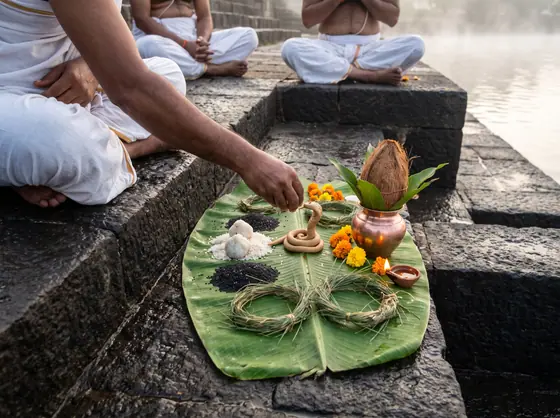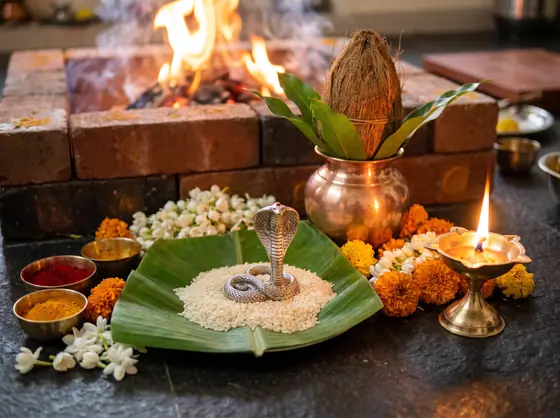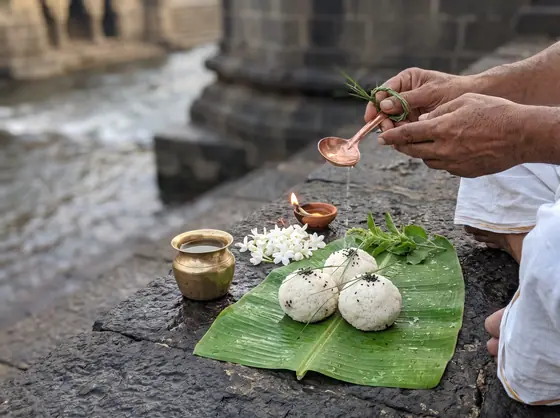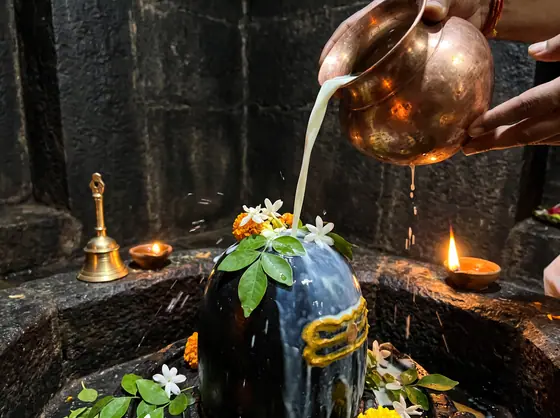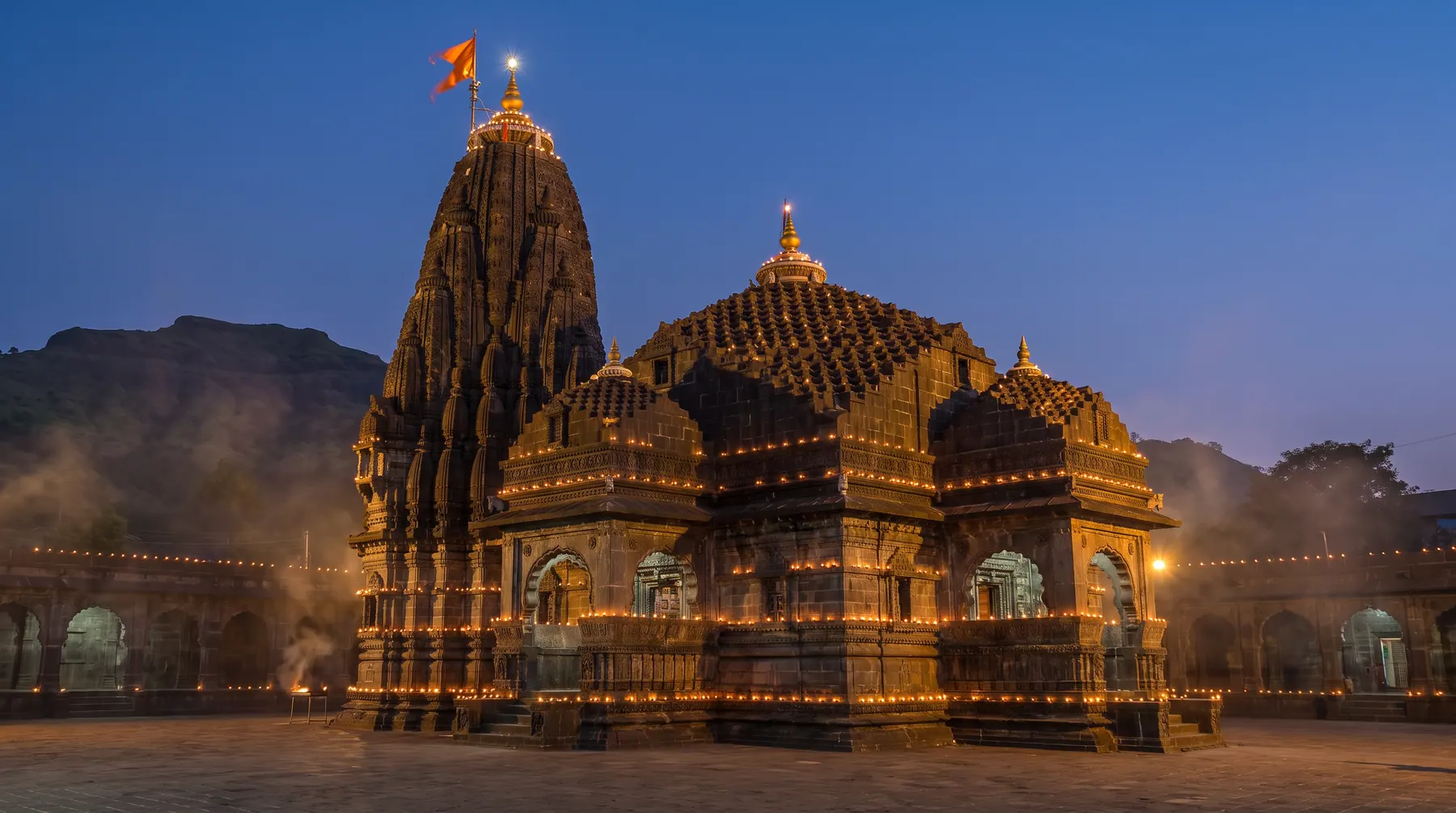
The Maha Mrityunjaya mantra, Om Tryambakam yajamahe…, is one of the most revered prayers to Lord Shiva. It addresses him as Tryambaka, the three-eyed one, the very name of the deity at Trimbakeshwar, and asks to be freed from the bondage of death as easily as a ripe cucumber is freed from its vine. For centuries families have turned to it during illness, danger or uncertainty, and as a daily prayer for well-being.
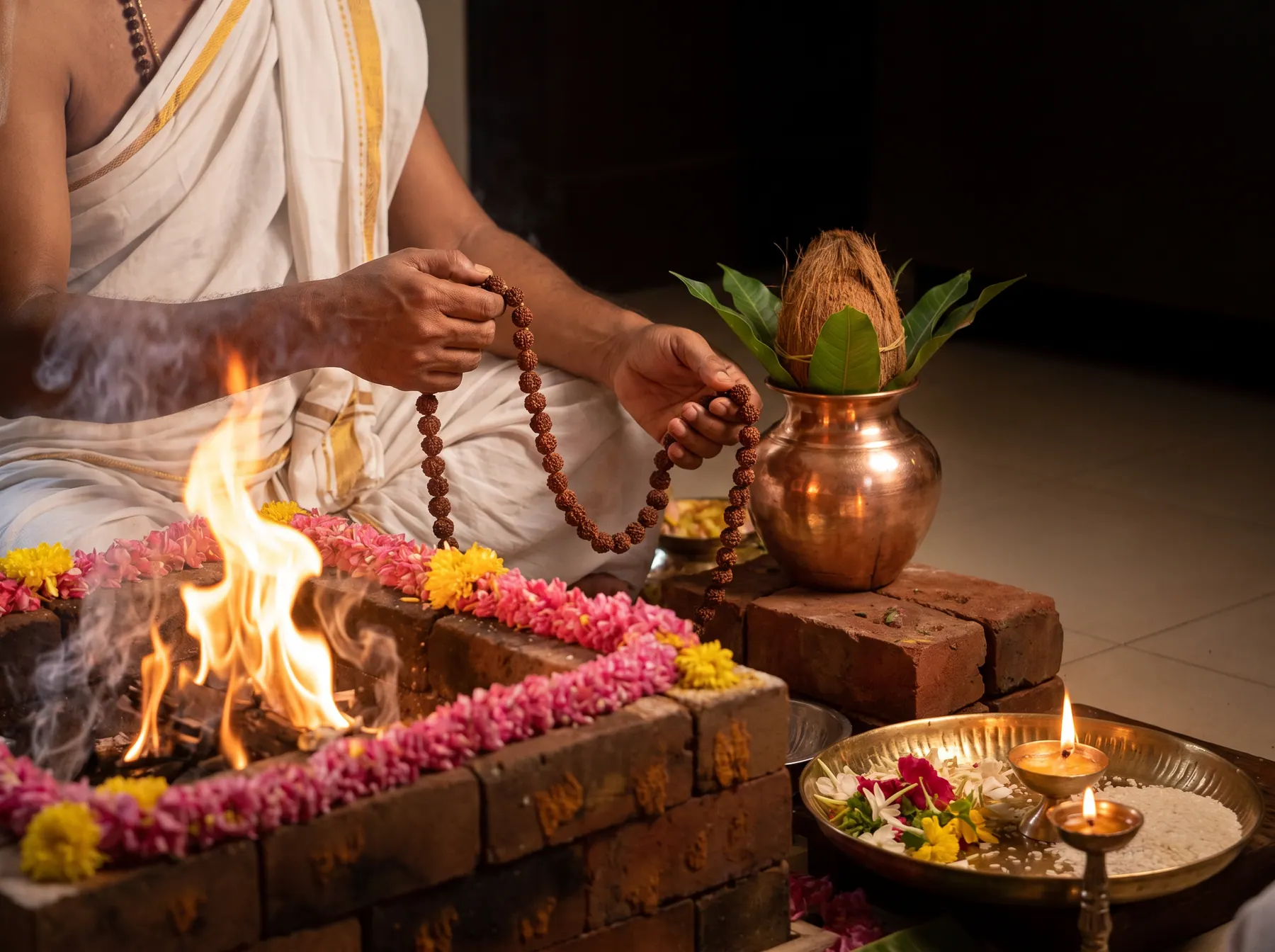
In a Maha Mrityunjaya Jaap, our pandits chant the mantra a resolved number of times on your behalf, after a sankalp in your name and gotra. The traditional full dedication is the sava lakh of 1,25,000 repetitions, which several pandits complete over a few days, followed by a havan. We will agree the count with you before booking, and you are welcome to join the sankalp, the chanting and the concluding havan.
Why at Trimbakeshwar
The mantra praises Shiva as Tryambaka, and Trimbakeshwar is the Jyotirlinga that carries that very name. For many devotees, chanting Tryambakam yajamahe in Tryambakeshwar's own town, beside the source of the Godavari, gives the prayer a special closeness. The town's long tradition of Vedic learning and ritual makes it a natural place for an extended japa.
Significance
Mrityunjaya means "victor over death", a name of Shiva. The mantra does not ask for physical immortality; it asks to be released from the fear and bondage of death, and to be held instead in the nectar of the eternal. That is why it is chanted both in times of danger and as a prayer for health, long life and inner steadiness.
Japa done with a resolved count and sankalp is a traditional way to offer a prayer in full. It is customary to conclude a large japa with a havan, often of one-tenth (dashansh) of the count, followed by purnahuti and aarti.
In the scriptures
The mantra is verse 7.59.12 of the Rigveda, in a hymn attributed to the sage Vasishtha, and it also appears in the Yajurveda (Taittiriya Samhita 1.8.6 and Vajasaneyi Samhita 3.60). In popular devotion it is also linked with the story of the young sage Markandeya, whom Shiva protected from Yama.
त्र्यम्बकं यजामहे सुगन्धिं पुष्टिवर्धनम्। उर्वारुकमिव बन्धनान्मृत्योर्मुक्षीय माऽमृतात्॥
Why devotees perform it
Families often arrange this jaap when someone is unwell or facing surgery, during a difficult planetary period, for an elderly parent, after a frightening event, or simply as a prayer for the protection and well-being of the household. The jaap is offered alongside, never instead of, medical care. Anyone may sponsor it, for themselves or for a family member.
- Praying for a family member who is unwell or facing surgery, alongside medical care
- Seeking Shiva's protection during a difficult planetary period
- As a prayer for the long life and well-being of parents and elders
- Finding strength and steadiness after a frightening event
- Offering a large japa as an act of devotion at Tryambakeshwar's own shrine
- Marking a birthday or milestone with a prayer for health
How the pooja is performed
Agreeing the count
Before booking, we agree with you the number of repetitions and the dates. The count decides how many days the jaap takes.
Sankalp and kalash sthapana
On the first day, Ganesh pujan, kalash sthapana and the sankalp in your name and gotra (and that of the person the jaap is for) begin the ritual.
Invocation of Lord Mrityunjaya
Lord Shiva is invoked as Mrityunjaya and worshipped before the japa begins.
The japa
Our pandits chant the mantra with the resolved count over one or more days, keeping a careful tally.
Havan, purnahuti and aarti
The jaap concludes with a havan, purnahuti and aarti. This is the best moment for the family to be present.
Before you come
- Decide who will attend. You are welcome for the whole jaap; at minimum, many families attend the sankalp on Day 1 and the havan on the last day. We will confirm timings on WhatsApp.
- Bring: the full name, gotra (if known) and, if you wish, birth details of the person the jaap is for.
- Clothing: clean traditional clothes; white or saffron is commonly worn for this jaap.
- Food: many families keep to sattvic food during the jaap days. If the jaap is for someone who is ill, their doctor's advice comes first.
- If you cannot travel, please ask us before booking.
What we arrange
- Pooja and havan samagri
- Japa by our family pandits with the agreed count
- Sankalp in your name and gotra, and that of the person the jaap is for
- Concluding havan, purnahuti and aarti
Dakshina covers the pooja as described. Ask us about samagri and stay.
Questions devotees ask
How many times is the mantra chanted?
The traditional full dedication is 1,25,000 (sava lakh) repetitions, but smaller counts are also offered. We agree the count with you before booking.
How many days does the jaap take?
Between one and three days, depending on the count and the number of pandits chanting.
Do I need to be present for the whole jaap?
You are welcome throughout. Many families attend the sankalp at the start and the havan at the end. If you cannot travel at all, please ask us before booking.
Can the jaap be done for someone else, such as a parent?
Yes. The sankalp is taken for the person the jaap is for, and a family member can sit for it on their behalf.
Is the Maha Mrityunjaya Jaap only for people who are ill?
No. It is a prayer for protection, health and peace that anyone can offer, on any occasion.
Can it replace medical treatment?
No. The jaap is a prayer, offered alongside medical care. Please continue to follow your doctor's advice.
What is the cost of Maha Mrityunjaya Jaap at Trimbakeshwar?
The current dakshina is shown at the top of this page. Because the count can vary, please confirm with us what the listed dakshina covers before booking. A small advance may be requested to confirm your dates.