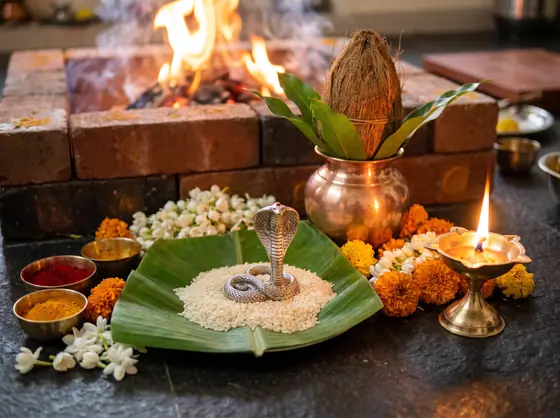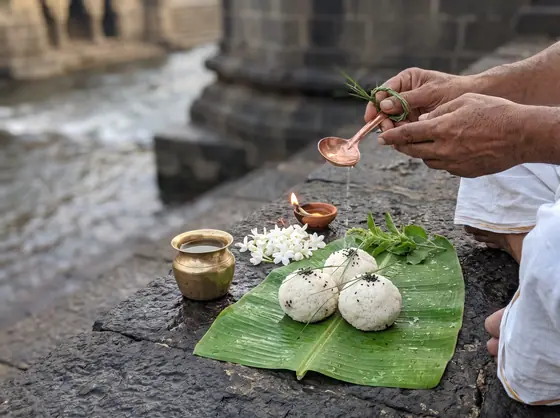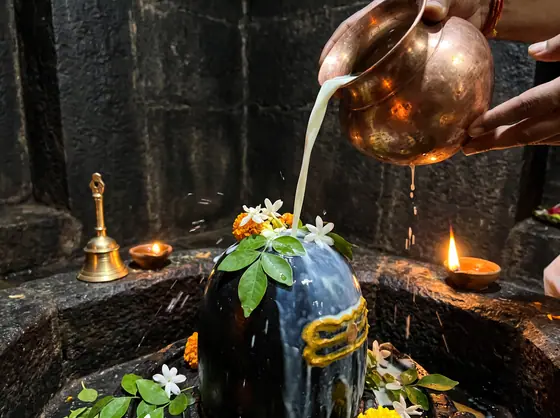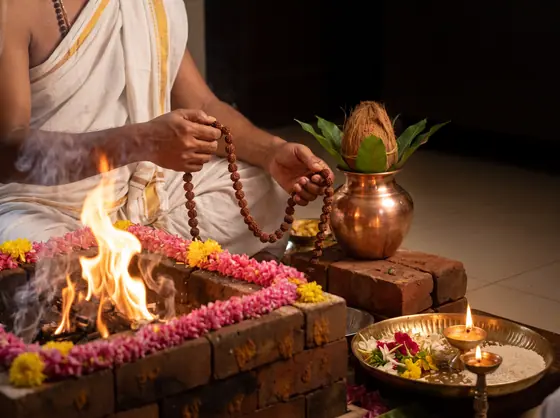
Narayan Nagbali (sometimes written Narayan Bali Nagbali) is two rites performed together over three days. Narayan Bali is offered for family members whose death was untimely or unnatural (an accident, drowning, a sudden death) or whose last rites could not be completed properly. Nagbali is a prayashchitta, an act of atonement, for the killing of a serpent, especially a cobra, whether it happened knowingly or unknowingly.
Families usually come to this rite after a long stretch of worry: repeated setbacks, a feeling that something in the family line is unsettled, or an astrologer's advice about Pitru Dosh. We understand that. Before you book, we speak with you, explain what the rite involves and whether it is the right one for your situation, and then guide you through each of the three days so that you can perform it calmly and with full attention.
Why at Trimbakeshwar
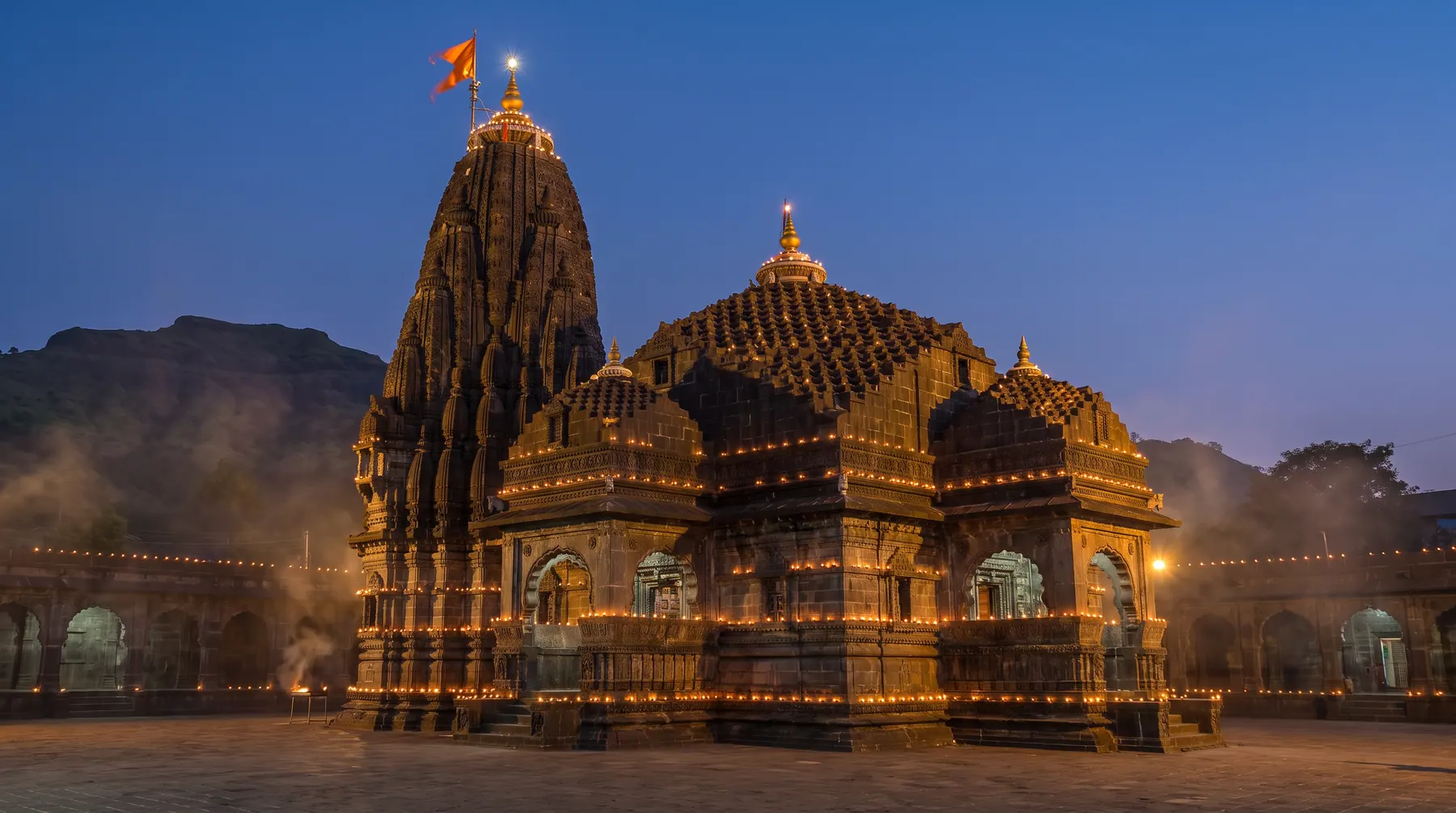
Trimbakeshwar is the place most closely associated with Narayan Nagbali. The priestly tradition of Trimbak, citing texts such as the Dharmasindhu, holds that this rite should be performed here, and the purohit families of Trimbakeshwar have kept its full three-day procedure alive for generations. The setting matters too: the Jyotirlinga of Tryambakeshwar, the Godavari rising from the Brahmagiri hills, and the sacred Kushavarta Tirth, where the purifying bath that begins the rite is taken.
Significance
In Hindu tradition, the last rites (antyeshti) and the shraddha that follows are believed to help the departed move on peacefully. When a death is sudden or unnatural, or when those rites could not be done, families often feel that a duty remains unfinished. Narayan Bali answers this: it follows the pattern of the funeral rites in a condensed form, using a symbolic body made of wheat flour into which the departed is invoked with Vedic mantras, followed by offerings and pind daan.
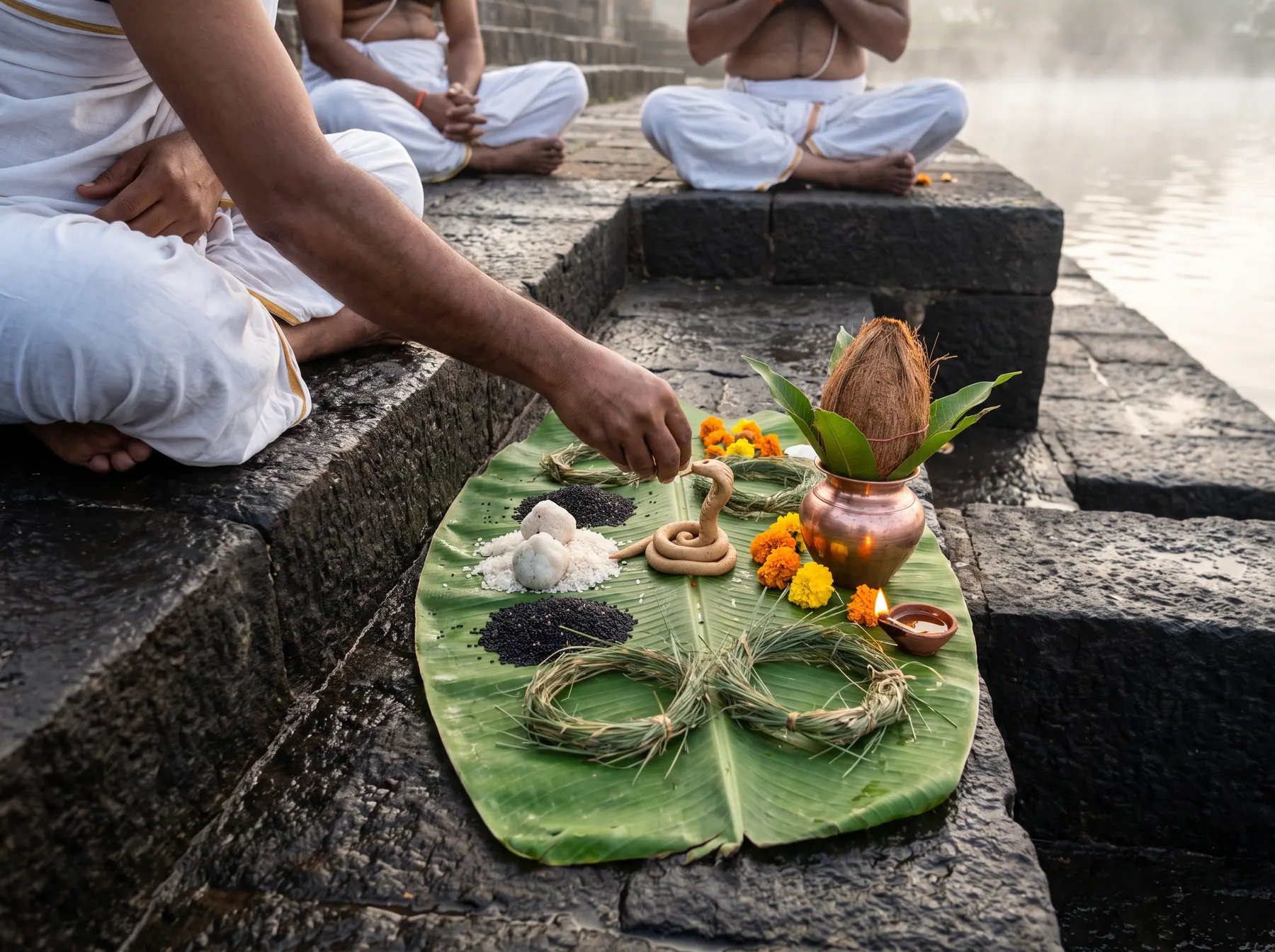
Nagbali follows the same pattern with a dough image of a serpent. The serpent (naga) is revered in Indian tradition and closely linked with Lord Shiva, so harming one is traditionally seen as a serious fault that calls for atonement. Performed together at Trimbakeshwar, the two rites are generally done once in a lifetime for a given purpose.
In the scriptures
The Garuda Purana devotes a chapter (chapter 40 in commonly cited editions) to the Narayan Bali rites, describing them for those who died untimely deaths and for whom the ordinary rites could not be performed. The priestly tradition of Trimbak also cites the Dharmasindhu, a widely used handbook of Hindu rites, for the rule that Narayan Nagbali be performed at Trimbakeshwar. Beyond these texts, the detailed procedure has come down mainly through the living practice of Trimbakeshwar's purohit families.
Why devotees perform it
Families usually consider Narayan Nagbali when a family member died an untimely or unnatural death, when the last rites of someone in the family could not be performed properly, when a serpent was killed by someone in the family, or when an astrologer has pointed to Pitru Dosh or Sarpa Dosh. Some families simply wish to fulfil their duty towards ancestors after years of unexplained difficulty.
The rite is traditionally performed by a married couple together, or by a family member acting as karta (the one who performs it). Whether an unmarried person, or a woman alone, can sit as karta depends on the purpose and on family custom, so please tell us your situation and we will explain what the tradition here allows.
- Seeking peace and a good onward journey (sadgati) for a family member who died an untimely or unnatural death
- Completing rites that could not be performed properly at the time of a death in the family
- As atonement (prayashchitta) for harm done to a serpent, knowingly or unknowingly
- When an astrologer has pointed to Pitru Dosh or Sarpa Dosh in the horoscope
- Praying for harmony and well-being in the family line
- Fulfilling a sense of duty towards ancestors, known and unknown
How the pooja is performed
Holy bath and sankalp
On the morning of Day 1 you take a purifying bath at Kushavarta Tirth and offer prayers to Lord Tryambakeshwar. The pandit then helps you take the *sankalp*, the formal resolve stating your name, gotra and the purpose of the rite.
Narayan Bali (Day 1)
After Ganesh pujan and punyahavachan, a symbolic body is prepared from wheat flour and the departed is invoked with Vedic mantras. Rites follow the pattern of the funeral ceremonies, with offerings traditionally made to Brahma, Vishnu, Rudra, Yama and the departed soul, and pind daan.
Nagbali (Day 2)
On the second day the Nagbali is performed in the same way, using a dough image of a serpent. Mantras of atonement are recited, the serpent image is honoured and its last rites are completed, followed by the related shraddha offerings.
Nag pujan and conclusion (Day 3)
The final day begins with Ganesh pujan and punyahavachan, followed by worship of a Naga image (a small metal serpent image is traditionally used). The rite closes with prayers, *daan* (offerings in charity) and blessings from the pandits.
Darshan and guidance for the days ahead
Before you leave, the pandit explains any customs your family may wish to observe in the following days. Many families also take darshan at the Trimbakeshwar temple before they travel home.
Before you come
- Plan to stay in Trimbak for all three days. Arrive the evening before Day 1; we will confirm the reporting time and place on WhatsApp.
- Clothing: traditionally, new white clothes are worn: a dhoti and upper cloth for men, and a saree for women (black and green are traditionally avoided).
- Bring: a photo ID, and the names (and gotra, if known) of the family member(s) the rite is for. If names or dates are not known, the rite can still be performed.
- Food: many families keep to simple sattvic food, avoiding onion, garlic, non-vegetarian food and alcohol, for a few days before and during the rite. This is traditional guidance, not a condition.
- Please tell us privately if anyone who will sit for the rite is in a period of sutak (after a birth or death in the family), is menstruating on the dates, or is pregnant, so we can advise or help you choose another date.
- Keep your phone on silent during the rites.
What we arrange
- Pooja samagri for all three days
- The rite performed by our family pandits, with guidance at every step
- Sankalp in your name and gotra
- A call before booking to understand your situation and explain the rite
- Help choosing a suitable muhurat date
Dakshina covers the pooja as described. Ask us about samagri and stay.
Questions devotees ask
What does Narayan Nagbali cost at Trimbakeshwar?
The current dakshina for the full three-day rite is shown at the top of this page, and what it covers is listed under What we arrange. A small advance may be requested to confirm your date. If anything is unclear, ask us before you travel so there are no surprises.
Is Narayan Nagbali performed only at Trimbakeshwar?
Trimbakeshwar is the place most closely associated with it. The local priestly tradition, citing the Dharmasindhu, holds that the rite should be performed here, and the full three-day procedure is preserved by Trimbakeshwar's purohit families.
Do we need to stay for all three days?
Yes. The rite runs across three consecutive days and the person performing it needs to be present each day. Plan to arrive the evening before Day 1 and leave after the rites end on Day 3.
Can it be done if we don't know the names or the date of death?
Yes. Many families do not have complete details. The sankalp can be taken for known and unknown ancestors, and the pandit will guide you on how this is done.
Can a woman or an unmarried person perform Narayan Nagbali?
The rite is traditionally performed by a married couple or by a family member acting as karta. Practices for unmarried people and for women performing alone vary with the purpose and with family custom, so please share your situation and we will explain what the tradition here allows.
Can it be performed if my parents are alive?
Many families perform it while their parents are alive, because the rite is for a specific departed person or for an atonement, not for the parents. Traditional considerations do depend on whom the rite is for, so please tell us and we will guide you.
Can we perform it during mourning (sutak) or during periods?
Traditionally, the person sitting for the rite does not do so during sutak after a birth or death in the family, and women traditionally do not sit for the rite during menstruation. Customs vary between families, so please tell us privately. We will help you choose a suitable date without any awkwardness.
On which dates is Narayan Nagbali performed?
It is begun only on suitable muhurat dates, chosen from the Hindu calendar (panchang), and some days are avoided. There are usually a few suitable dates each month. Share your preferred travel window and we will tell you the available dates.
Is it done only once in a lifetime?
For a given purpose it is generally performed once. If you have performed it before and are unsure whether to repeat it, please talk to us first.