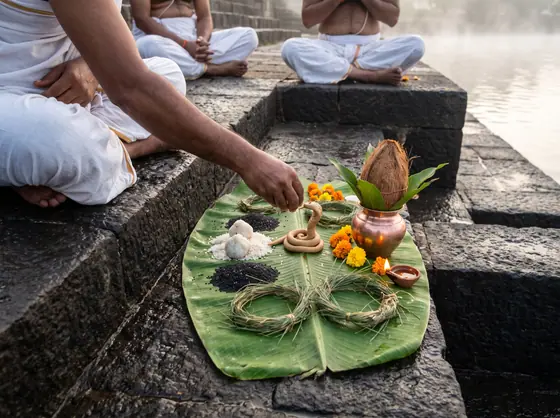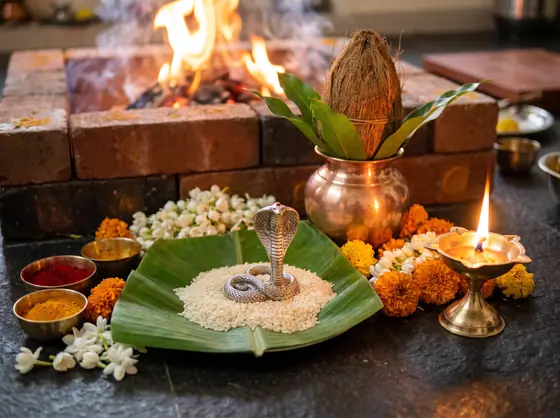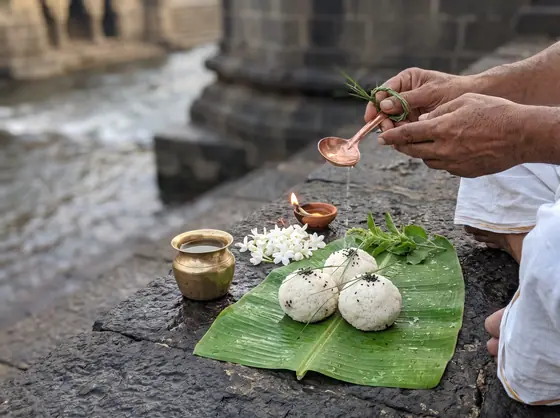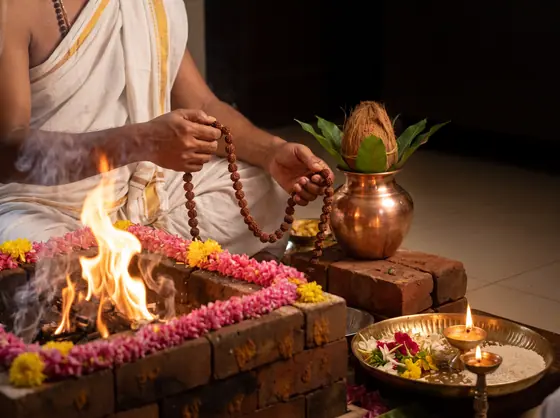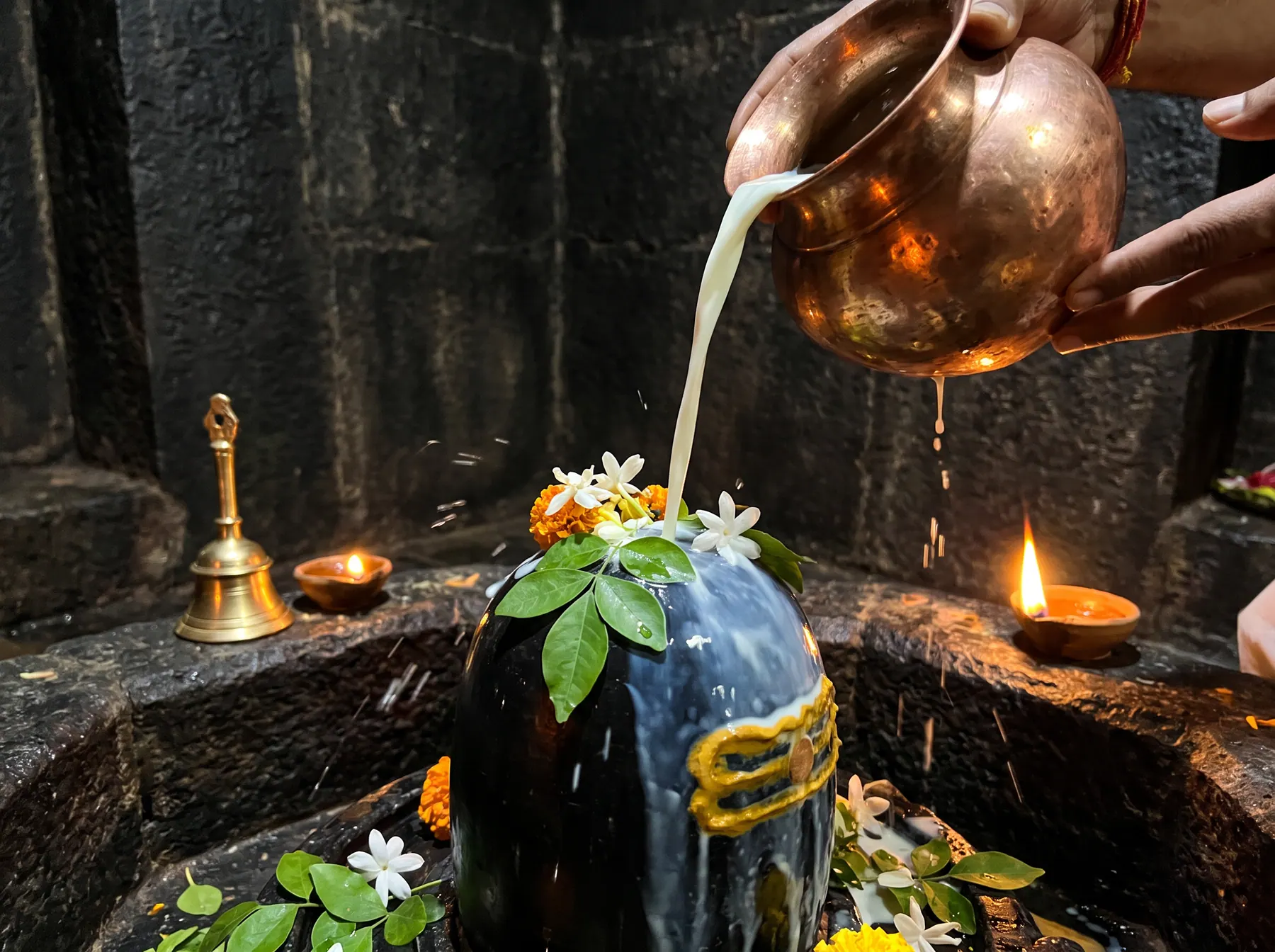
Rudrabhishek is the bathing (abhishek) of the Shivalinga with water, milk, curd, ghee, honey and other sacred offerings, accompanied by the chanting of the Rudra hymns of the Yajurveda. It is one of the most loved forms of Shiva worship, performed on Mondays, during Shravan, on Pradosh and Mahashivratri, on birthdays and anniversaries, or whenever a devotee simply wishes to offer prayers to Mahadev.
Our Rudrabhishek takes about 30 to 40 minutes. It is a good choice for families visiting Trimbakeshwar for darshan who want to take part in a proper Vedic pooja without committing a whole day, and it is often performed after Kaal Sarp Shanti or other rites to close the visit with Shiva's worship.
Why at Trimbakeshwar
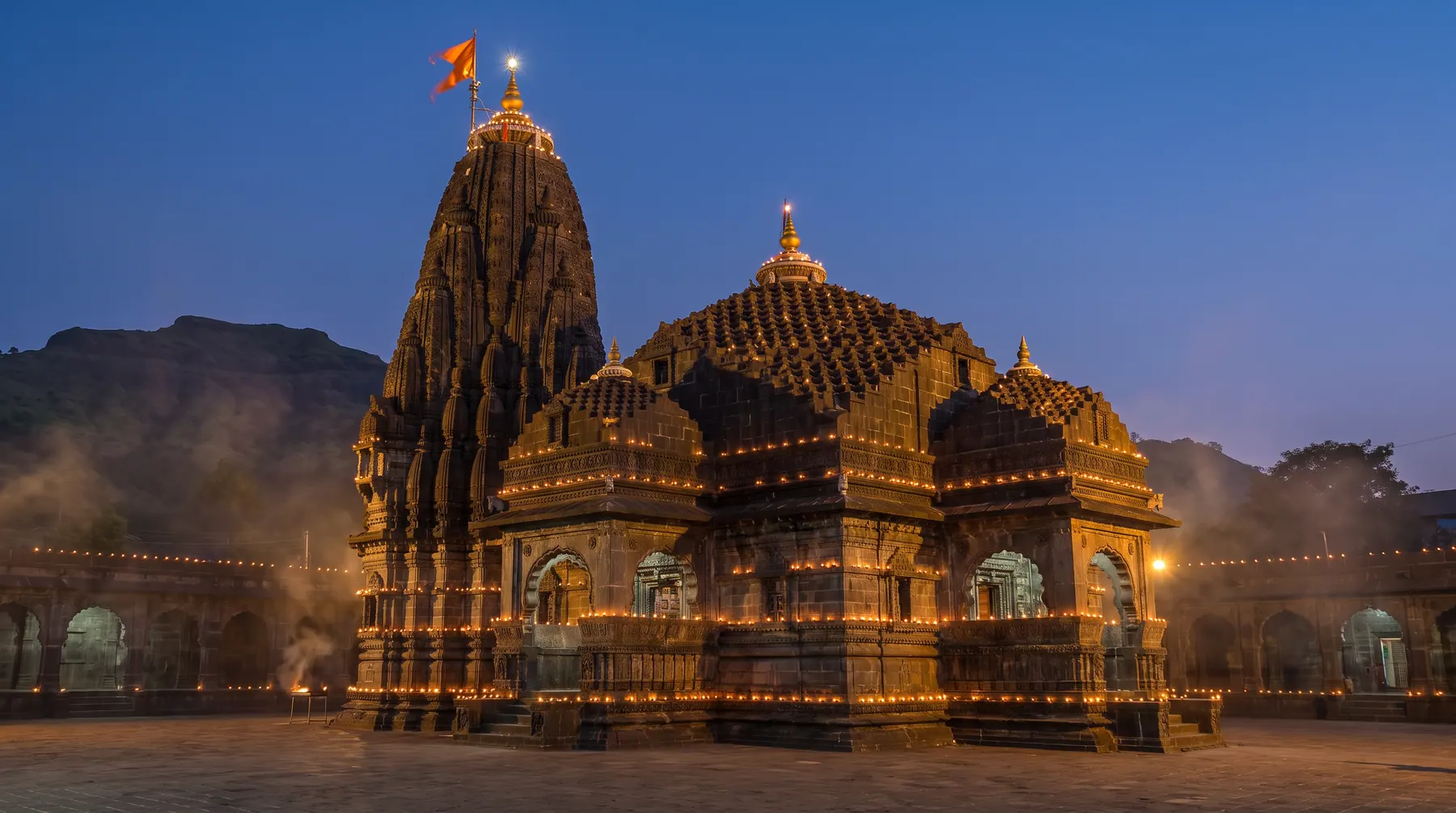
Trimbakeshwar is one of the twelve Jyotirlingas, the shrines where Shiva is worshipped as a radiant column of light. Here he is Tryambaka, the three-eyed Lord, and the linga in the sanctum is traditionally described as having three faces, honouring Brahma, Vishnu and Shiva. Offering abhishek in this sacred town, close to the Godavari's source at Kushavarta, is something many devotees hope to do at least once in their lives.
Significance
Shiva is often called Abhisheka-priya, the one who loves abhishek. Each offering carries its own traditional meaning: water for purity, milk for nourishment, curd for prosperity, ghee for strength, honey for sweetness of speech and relationships, and bilva leaves as the offering most dear to Shiva. As these are poured, the pandits chant the Rudra hymns, praising Shiva in his many forms and asking for his grace on the devotee and the family.
In the scriptures
The heart of Rudrabhishek is the Rudradhyaya of the Yajurveda, known in much of India as Sri Rudram, an eleven-part hymn found in the Taittiriya Samhita of the Krishna Yajurveda; the Shukla Yajurveda has its own Rudra chapters, widely used as the Rudrashtadhyayi. Puranic literature such as the Shiva Purana praises the worship of the Shivalinga with abhishek. Repeating the Rudra in multiples of eleven gives the larger rituals: Laghu Rudra and Maha Rudra.
Why devotees perform it
Anyone can offer Rudrabhishek: individuals, couples and whole families, of any age. Devotees perform it on Mondays and in Shravan, on Mahashivratri and Pradosh, on birthdays and anniversaries, before a new venture, while a family member is unwell, or simply out of love for Mahadev. It is also a natural way to close a visit to Trimbakeshwar after another ritual.
- To offer worship to Lord Shiva at one of the twelve Jyotirlingas
- On Mondays, Shravan, Pradosh or Mahashivratri, days traditionally dear to Shiva
- Praying for the well-being of the family, or of a loved one who is unwell
- Seeking blessings on a birthday, anniversary or new beginning
- To close a visit after Kaal Sarp Shanti or another ritual with Shiva's worship
- For inner peace, through the sound of the Vedic Rudra chanting
How the pooja is performed
Sankalp
The pandit guides you through a short sankalp in your name and gotra, and the names of family members you wish to include.
Ganesh and preliminary pujan
A brief Ganesh pujan and invocation of Lord Shiva begin the worship.
Abhishek with Rudra chanting
While the pandits chant the Rudra mantras, you offer water, milk, curd, ghee, honey and other offerings over the Shivalinga, followed by bilva leaves and flowers.
Aarti and blessings
The pooja ends with aarti, a prayer for your family and blessings from the pandit.
Before you come
- Arrive about 15 minutes early. We will confirm the time and place on WhatsApp.
- Clothing: clean traditional clothes are best. Men often wear a dhoti or kurta-pyjama; women a saree or salwar suit.
- Bring: the names (and gotra, if known) of family members you wish to include in the sankalp.
- Food: there is no strict rule for this pooja. Many devotees prefer to come before eating, or after a light sattvic meal.
- Families, children and elders are all welcome.
What we arrange
- Abhishek samagri: milk, curd, ghee, honey, bilva leaves, flowers and other pooja items
- Rudra chanting by our family pandits
- Sankalp in your name and gotra, including family members
Dakshina covers the pooja as described. Ask us about samagri and stay.
Questions devotees ask
What is the cost of Rudrabhishek at Trimbakeshwar?
The current dakshina is shown at the top of this page, and the samagri is included as listed under What we arrange. A small advance may be requested to confirm your slot.
How long does Rudrabhishek take?
About 30 to 40 minutes. Please allow time for travel within Trimbak and for temple darshan, which can take longer on Mondays and festival days.
Which day is best for Rudrabhishek?
Mondays, Pradosh, the month of Shravan and Mahashivratri are traditionally dear to Shiva, but Rudrabhishek can be offered on any day. Festival days are very crowded, so book early.
Can the whole family take part?
Yes. Family members can sit together and offer the abhishek, and all their names can be included in the sankalp.
What is the difference between Rudrabhishek, Laghu Rudra and Maha Rudra?
They differ in how many times the Rudra is recited. Rudrabhishek is the basic form. In the traditional reckoning, eleven recitations make an Ekadashini, eleven Ekadashinis (121 recitations) make a Laghu Rudra, and eleven Laghu Rudras (1,331 recitations) make a Maha Rudra.
Can I combine Rudrabhishek with another pooja?
Yes. Many devotees perform it on the same day as Kaal Sarp Shanti or after a pitru rite. Mention this when booking and we will plan the timing.