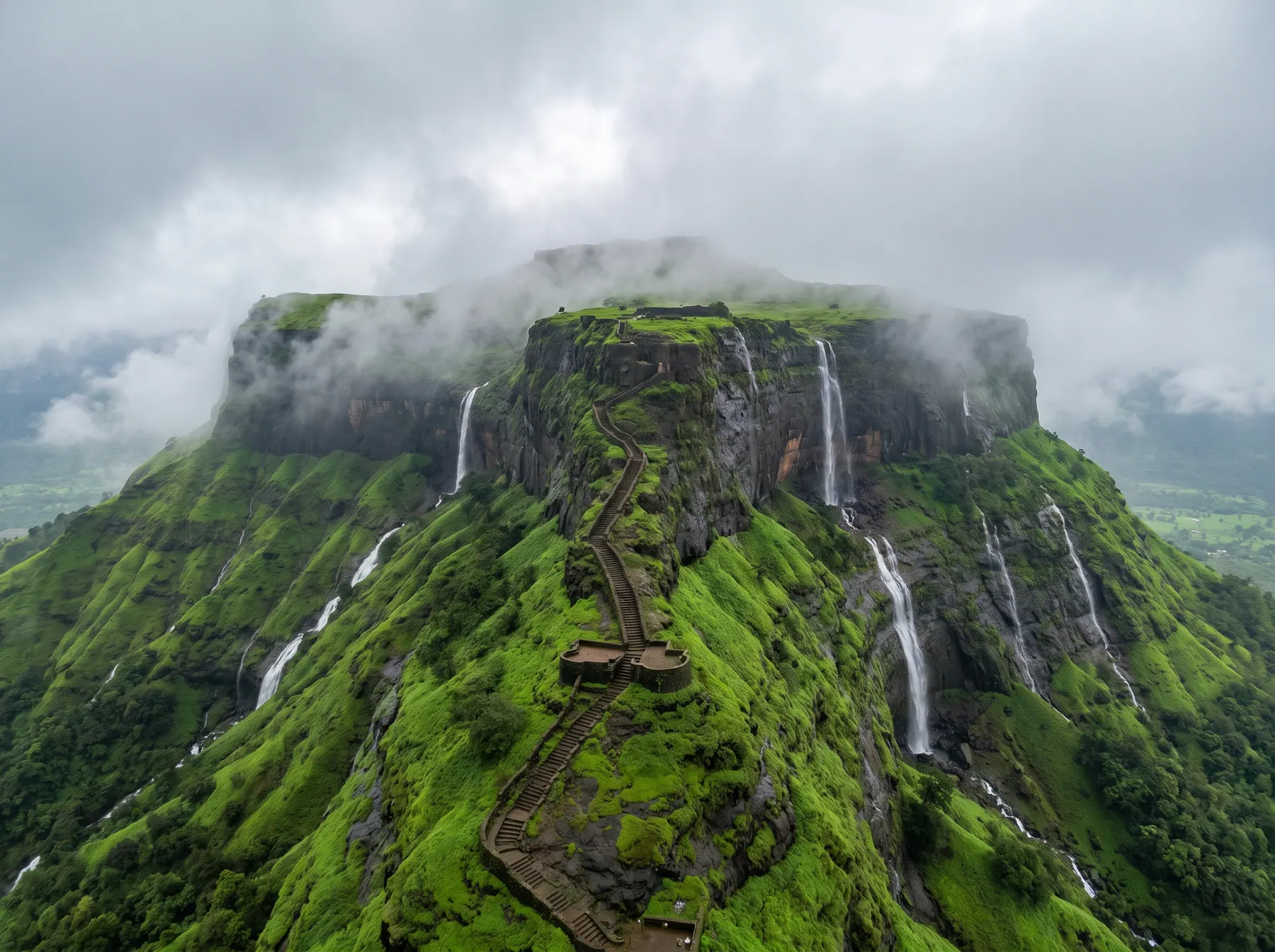
Look up from almost anywhere in Trimbak and you will see Brahmagiri, a great flat-topped hill of the Western Ghats rising behind the town. It is the highest point in the immediate area, at roughly 1,295 metres above sea level, and it is far more than scenery. For devotees, Brahmagiri is the hill where the Godavari was born, where Sage Gautama performed his penance, and around which thousands walk barefoot every Shravan.
The hill of Brahma
Brahmagiri means "the hill of Brahma". Local tradition regards the hill itself as sacred, and its slopes are dotted with small shrines, springs and kunds. According to legend, the sage Gautama and his wife Ahalya lived here, and it was on Brahmagiri that Gautama prayed to Shiva for the Ganga to come down. Shiva released her on this hill, and she flowed as the Godavari. Trimbakeshwar temple stands at the foot of Brahmagiri, and the whole sacred landscape of Trimbak, from the river's source to Kushavarta, is shaped by it.
Tradition also describes Brahmagiri as having several peaks, from which different streams flow. The Godavari flows east towards the Bay of Bengal; the Vaitarna, rising very close by, flows west to the Arabian Sea and feeds a reservoir that supplies Mumbai.
The climb to the source of the Godavari
A path of steps leads up Brahmagiri towards the source of the Godavari. Many of the rock-cut steps on the hill were built in the early twentieth century with donations from devotees; the Shri Trimbakeshwar Devasthan Trust records a donation by a benefactor from Karachi for steps on the northern side. The climb is steep in places, with stretches of dirt track, steps and open rock. At the top, springs emerge among ancient fig trees, and there are small shrines associated with the river's origin.
Gangadwar, an important shrine on the hill, is reached by a separate route of several hundred concrete steps and is roughly halfway up. Many pilgrims who cannot manage the full climb visit Gangadwar instead.
The fort
Brahmagiri was also a fortified hill. According to the temple trust's history, the Marathas took the fort from the Nizam in 1742, and it passed to the British in 1818, after which it came under government control. Little of the fortification is visible today, but the history adds to the sense of standing on a hill that has watched over Trimbak for centuries.
The Shravan pradakshina
Every year in the holy month of Shravan (usually July to August), thousands of devotees walk around Brahmagiri in a sacred circuit known as the Brahmagiri pradakshina or Trimbakeshwar pheri. It traditionally begins from Kushavarta, often on the night before a Shravan Monday, and is walked barefoot. Accounts of the route describe it as about 40 km. It is an act of devotion and endurance, done in the monsoon when the hills are green and the paths are wet and slippery. If you are considering it, go with experienced companions, follow local advisories, and be honest with yourself about your fitness.
When to visit
- Monsoon (roughly June to September): the hills are at their most beautiful, with waterfalls and mist, but the paths are slippery and visibility can drop quickly. Take extra care, or limit yourself to Gangadwar.
- Winter (roughly November to February): cool, clear and the most comfortable season for the climb.
- Summer (roughly March to May): hot by midday. Start at dawn and carry plenty of water.
Climbing safely
- Start early and allow several hours for the round trip to the top, more if you are with elders or children.
- Wear proper footwear for the climb (footwear is removed at shrines).
- Carry water and a small snack, and bring your rubbish back down.
- Watch out for monkeys. Keep food out of sight; a walking stick helps.
- Do not climb alone in bad weather, and turn back if the path becomes unsafe.
- Elderly devotees and those with heart or knee problems should consult their doctor first. Darshan at the temple and a visit to Kushavarta are complete acts of pilgrimage on their own.
Brahmagiri and your pooja
If you are coming to Trimbakeshwar for a pooja, plan the climb for a separate day. Most rituals begin early in the morning with a bath at Kushavarta and need you to be rested and attentive. A good plan is to arrive the evening before, complete your pooja and darshan, and, if you have energy and time, visit Gangadwar or climb Brahmagiri the following morning.
Care for the hill
Brahmagiri's springs and slopes are fragile. Local volunteers and groups have worked to desilt kunds and restore the hillside, but litter remains a problem on the trail. Please carry nothing up that you are not willing to carry down, and leave the springs as clean as you found them.
Standing on Brahmagiri, with Trimbak below and the Godavari's first trickle beside you, it is easy to understand why this hill has been held sacred for so long.
Planning Narayan Nagbali Pooja? See dakshina, duration and open dates.
View detailsMore guides
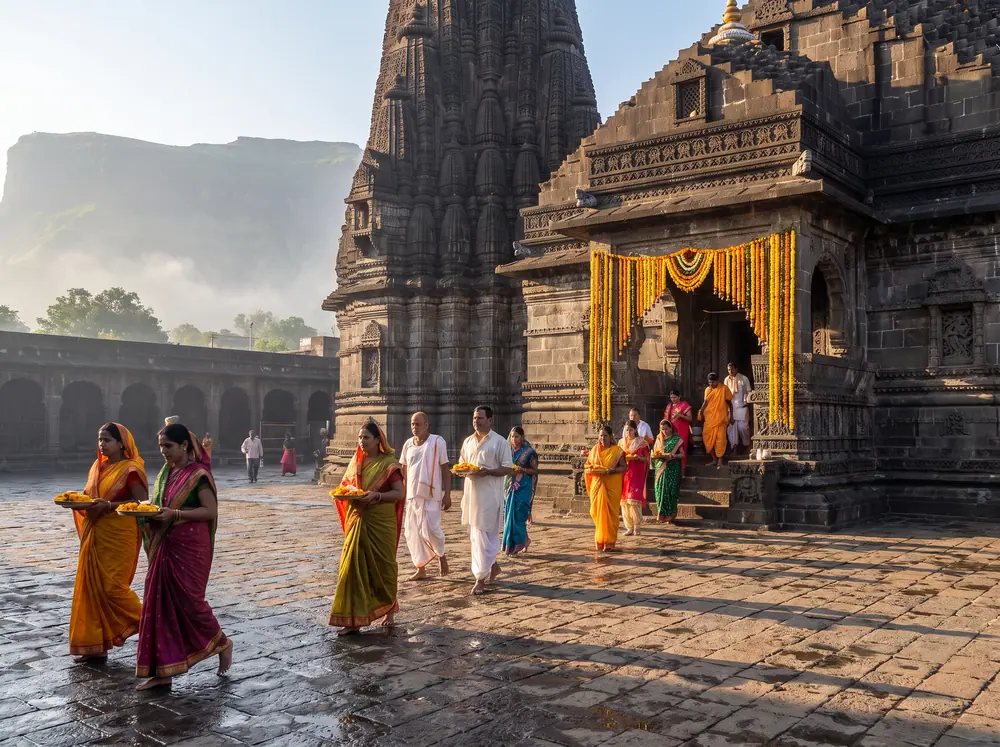
The History of Trimbakeshwar Temple
From the legend of Sage Gautama to the Peshwa-era temple of black stone: how Trimbakeshwar, one of the twelve Jyotirlingas, came to be what it is today.
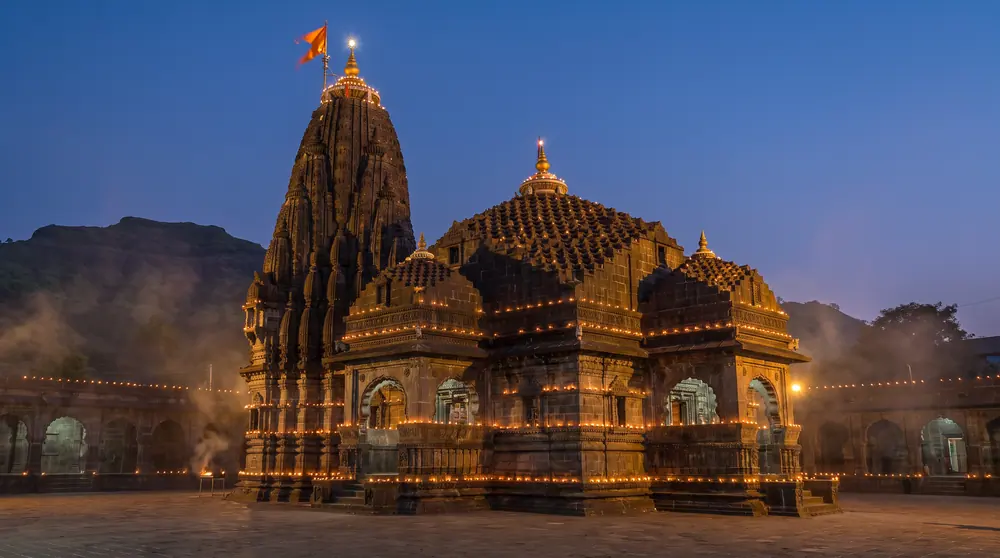
What Is a Jyotirlinga? Trimbakeshwar's Place Among the Twelve
The meaning of a Jyotirlinga, the story of Shiva's pillar of light, the twelve shrines, and why Trimbakeshwar holds a special place among them.
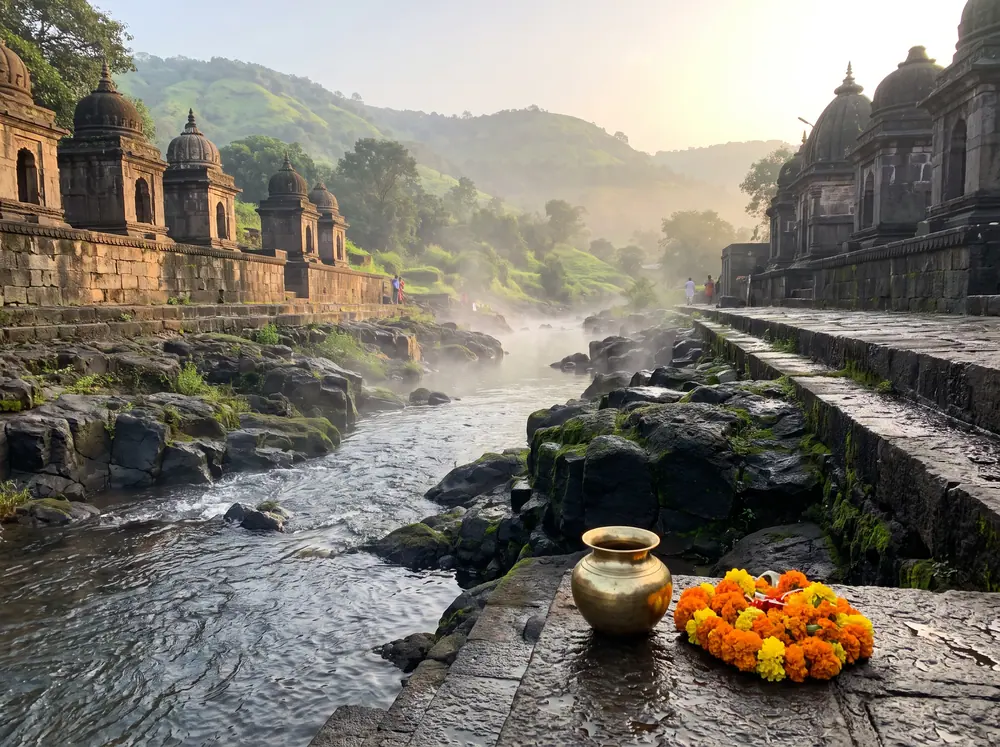
The Origin of the Godavari at Trimbakeshwar
How the Godavari, the Ganga of the South, rises on Brahmagiri: the legend of Sage Gautama, Gangadwar, Kushavarta Tirth, and the river's long journey to the sea.