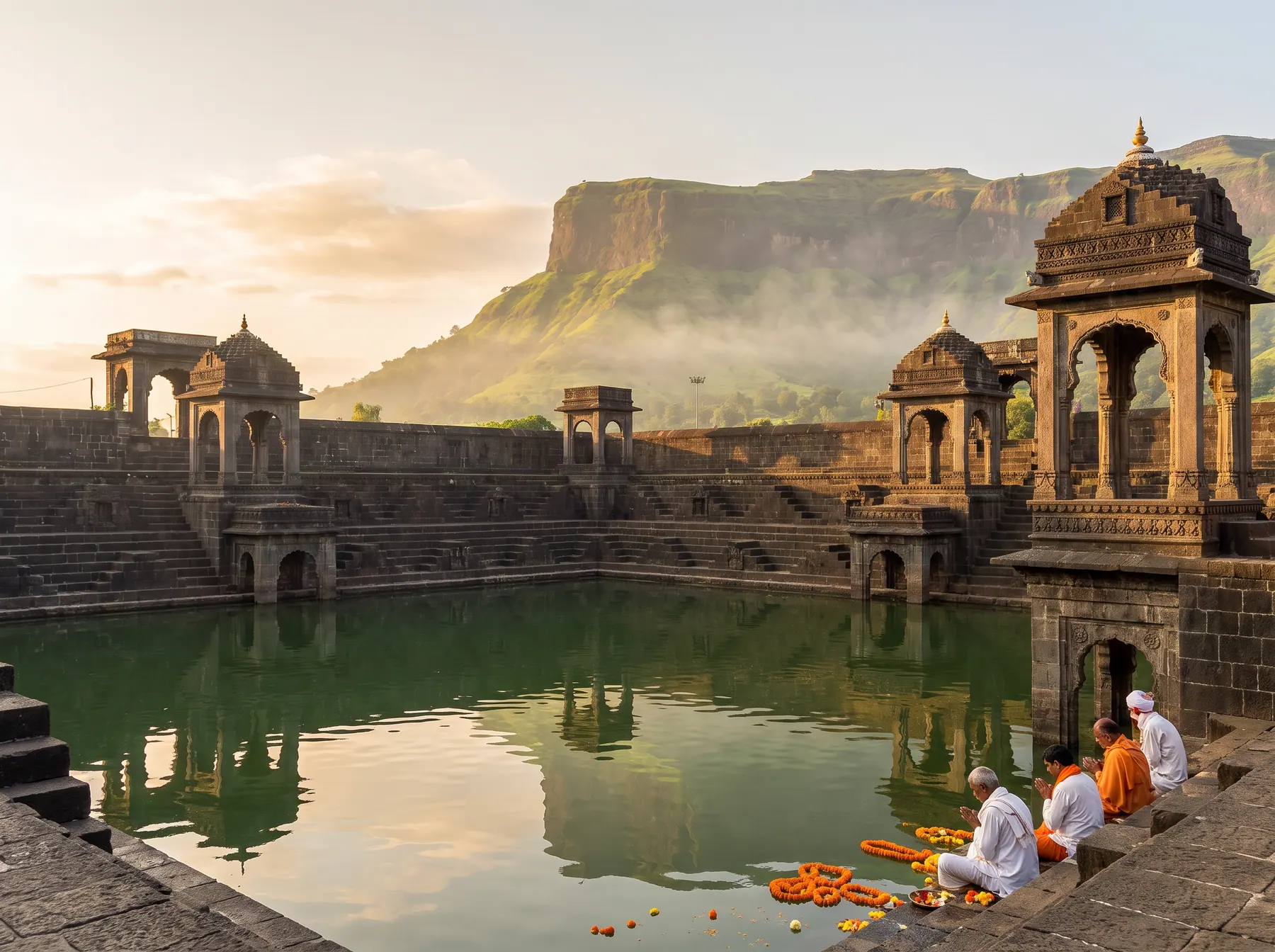
Trimbakeshwar welcomes pilgrims all year round. Some come for a few hours of darshan on the way from Nashik or Shirdi; others come for a ritual that needs a day or three; some come for a vow they have carried for years. Whatever your reason, a little preparation will make your visit calmer and more meaningful. This guide covers the essentials. For travel and stay, see our separate article on planning your pooja trip.
When to visit
The temple is open every day of the year. A few periods are especially busy:
- Mondays, Shiva's day, through the year.
- Shravan (usually July to August), especially Shravan Mondays, when the Brahmagiri pradakshina also takes place.
- Mahashivratri (usually February or March), the busiest day of the year.
- The Sant Nivruttinath yatra in the month of Paush (around January), when Varkari devotees gather in large numbers.
- The Simhastha Kumbh period. The current Simhastha at Nashik and Trimbakeshwar formally began on 31 October 2026, with the main Amrit Snan days announced for August and September 2027. Expect very large crowds, traffic restrictions and limited accommodation on and around those dates.
If you want a quieter visit, choose a weekday outside these periods and go early in the morning.
Darshan and queues
Darshan at Trimbakeshwar is managed by the Shri Trimbakeshwar Devasthan Trust. There is a general queue, and the trust also offers a paid donation darshan that can be booked through its official website. Waiting times vary greatly, from under an hour on a quiet weekday to many hours on festival days. Timings, queue arrangements and rules about the inner sanctum are set by the trust and change from time to time, so check the trust's official information close to your visit, or ask us when you call.
What to wear
Traditional, modest clothing is respectful and comfortable for both darshan and ritual: a dhoti or kurta-pyjama for men, a saree or salwar suit for women. For rituals, each pooja page on our site lists specific guidance (for example, white clothes for ancestral rites, and avoiding black). If you plan to bathe at Kushavarta, bring a change of clothes and a small towel.
Temple etiquette
- Footwear is left outside the temple; use the stands provided.
- Phones and cameras: follow the signs and the instructions of temple staff; photography may be restricted inside the temple.
- Bags: carry as little as possible. Large bags slow down security checks.
- Offerings: flowers, bilva leaves and other offerings can be bought near the temple. Offer them as directed by the staff.
- Patience and courtesy in the queue go a long way, especially with elders and families around you.
Kushavarta Tirth
Most pilgrims visit Kushavarta, the sacred tank regarded as the source of the Godavari, either before or after darshan. Many take a dip; others sprinkle the water on their head. If a ritual is in progress nearby, keep a respectful distance and do not photograph families without permission.
Coming for a ritual
Trimbakeshwar is famous for rituals such as Narayan Nagbali, Kaal Sarp Shanti and Tripindi Shraddha. If you are coming for one:
- Book in advance. Some rites are begun only on particular muhurat dates, and pandits' calendars fill up, especially in Shravan, Pitru Paksha and the Simhastha period.
- Arrive the evening before. Most rituals begin early in the morning with a bath at Kushavarta.
- Bring what is asked: usually a photo ID, names and gotra if known, and the clothing described for that ritual.
- Tell your pandit privately about any sutak (mourning period) in the family, menstruation on the planned date, or pregnancy, so they can advise you.
- Keep the day free. Do not plan a long drive or another engagement immediately after a ritual.
Choosing a pandit with confidence
Trimbak has many purohit families, and devotees often find the choice confusing. A few simple questions help:
- Is the dakshina clear? Ask what is included (samagri, meals, the naag pratima where relevant) and what is not, before you travel.
- Have you spoken to the family? A short call should leave you understanding what will happen and why.
- Do they explain rather than frighten? Be cautious of anyone who promises guaranteed results or pressures you with fear. Traditional rituals are acts of devotion and duty, not transactions with guaranteed outcomes.
- Will they tell you if you don't need something? An honest pandit will sometimes suggest a simpler rite, or none at all.
These are the standards we hold ourselves to, and we encourage you to expect them from anyone you book with.
A few practical notes
- Cash and UPI: carry a little cash for small offerings and purchases; digital payments are widely used.
- Food: simple vegetarian meals are easy to find in Trimbak.
- Elders: there are steps at Kushavarta and in parts of the temple, and queues can be long. Plan rest breaks and carry water.
- Weather: the monsoon brings heavy rain to the Ghats; carry an umbrella from June to September.
The heart of the visit
Darshan may last only a moment, and a ritual only a few hours, but many families carry the experience for a lifetime. Come rested, come with time to spare, and let the place work on you. If you would like help planning a ritual or simply have a question before you travel, call or message us. We are glad to help.
Planning Narayan Nagbali Pooja? See dakshina, duration and open dates.
View detailsMore guides
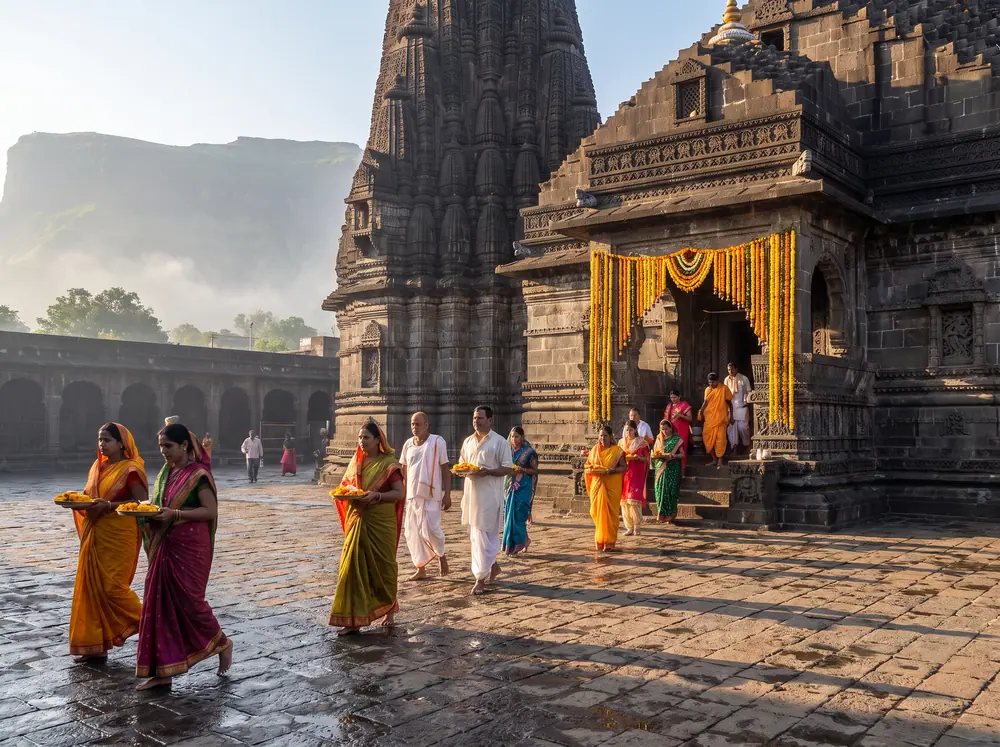
The History of Trimbakeshwar Temple
From the legend of Sage Gautama to the Peshwa-era temple of black stone: how Trimbakeshwar, one of the twelve Jyotirlingas, came to be what it is today.
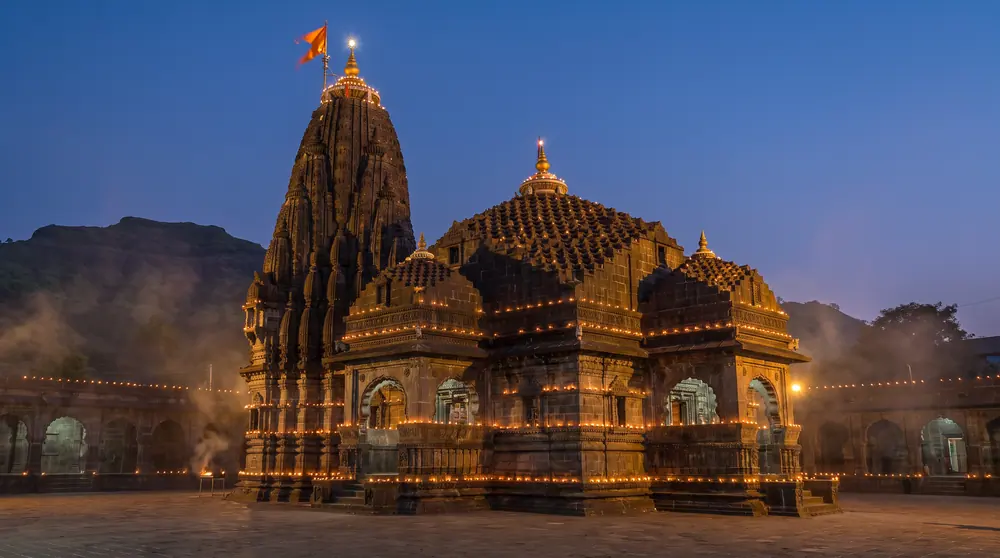
What Is a Jyotirlinga? Trimbakeshwar's Place Among the Twelve
The meaning of a Jyotirlinga, the story of Shiva's pillar of light, the twelve shrines, and why Trimbakeshwar holds a special place among them.
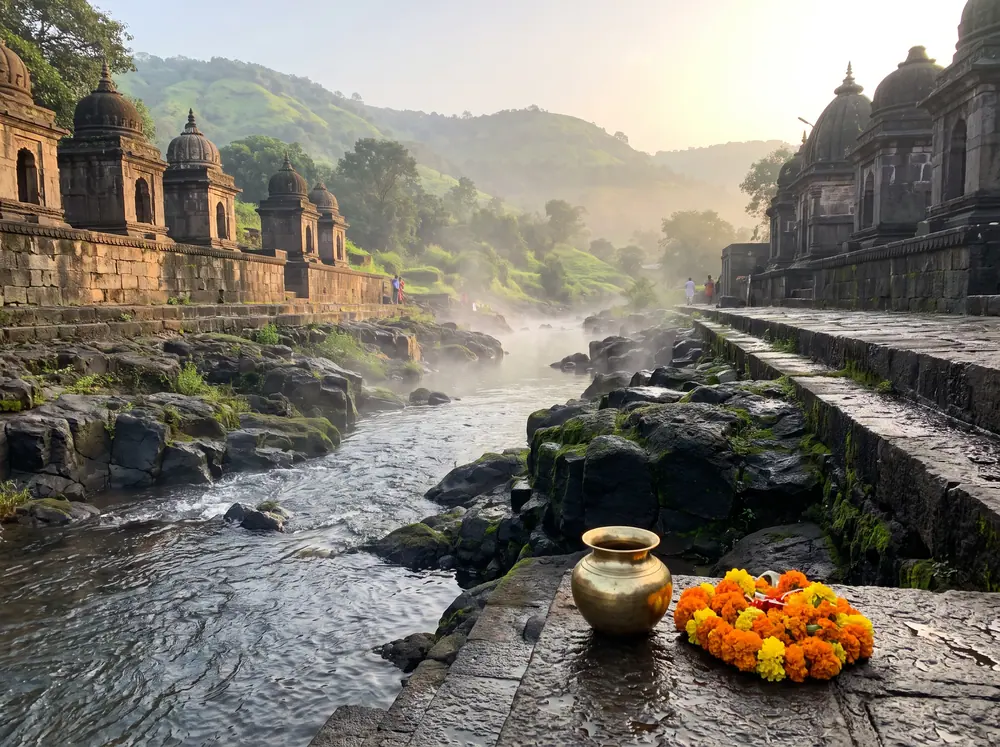
The Origin of the Godavari at Trimbakeshwar
How the Godavari, the Ganga of the South, rises on Brahmagiri: the legend of Sage Gautama, Gangadwar, Kushavarta Tirth, and the river's long journey to the sea.