Families who come to Trimbakeshwar for ancestral rites often ask us the same question: Should we do Narayan Nagbali or Tripindi Shraddha? Both are performed here, both concern the departed, and astrologers sometimes mention them in the same breath. But they are different rites with different purposes. This guide explains each one simply and sets them side by side, so you can talk to your pandit with confidence.
The short answer
- Tripindi Shraddha is a one-day shraddha for ancestors of the past three generations, known and unknown. It is most often chosen when regular shraddha has lapsed, or when a family wishes to honour all its ancestors together.
- Narayan Nagbali is a three-day rite performed for a family member who died an untimely or unnatural death, or whose last rites could not be completed, together with an atonement for the killing of a serpent.
If you are unsure, the most important question is: is there a specific untimely death, or a serpent-related concern, in the family? If yes, Narayan Nagbali is usually the rite being considered. If the concern is more general (lapsed rites, a wish to honour the ancestors, an astrologer's mention of Pitru Dosh), Tripindi or a Pitru Dosh Nivaran pooja is often the appropriate place to start.
Side by side
| Tripindi Shraddha | Narayan Nagbali | |
|---|---|---|
| Purpose | Shraddha for ancestors of three generations | Rites for an untimely death, and serpent atonement |
| Duration | 2 to 3 hours, single day | 3 consecutive days |
| Who it is for | All ancestors of three generations, known and unknown | A specific departed person (or persons), and the Nagbali atonement |
| Dates | Suitable dates through the year; Pitru Paksha is popular | Begun only on particular muhurat dates |
| Who performs | Men and women, married or unmarried | Traditionally a married couple or a family member as karta |
| How often | Usually once; some traditions repeat it after many years | Generally once in a lifetime for a given purpose |
| Stay needed | Arrive the evening before | Stay in Trimbak for all three days |
Understanding Tripindi Shraddha
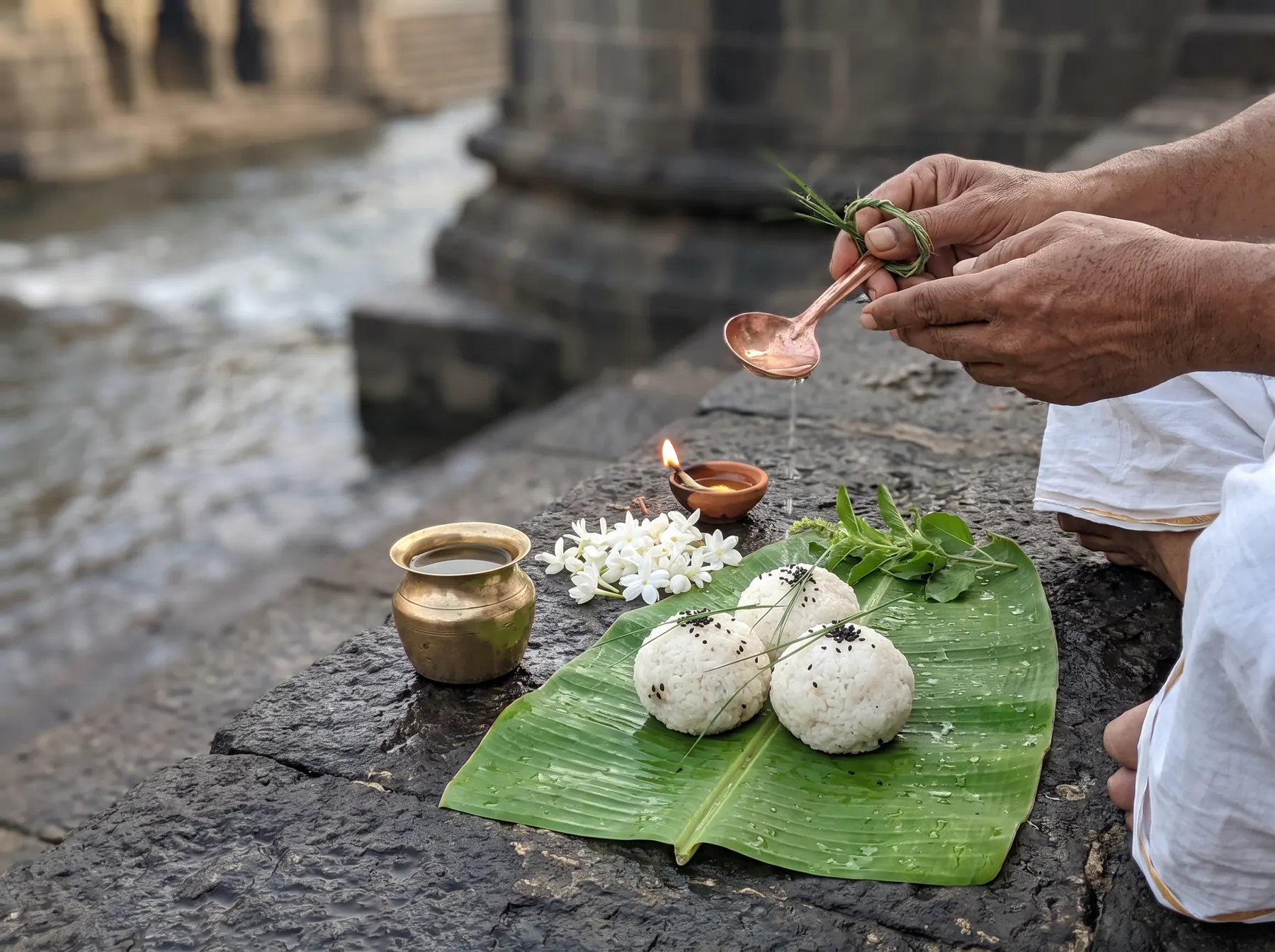
Shraddha is the act of offering to one's ancestors with faith. In the regular annual shraddha, offerings are made for particular ancestors on particular dates. Tripindi ("three pindas") is a special shraddha for ancestors of three generations together. In the tradition followed at Trimbakeshwar, three pindas (made from cooked rice, barley flour, black sesame and ghee) are offered with prayers associated with Brahma, Vishnu and Rudra, along with tarpan for ancestors on the father's and mother's sides.
Because it is offered for known and unknown ancestors, Tripindi is especially suitable when the family does not have complete names, when shraddha has been missed for some years, or when there is uncertainty about whether past rites were done correctly. It takes a single morning.
Understanding Narayan Nagbali
Narayan Bali follows the pattern of the funeral rites in condensed form. A symbolic body is made of wheat flour, the departed person is invoked with Vedic mantras, and the rites and pind daan that could not be done properly at the time are completed. The Garuda Purana devotes a chapter to Narayan Bali, describing it for those who died untimely deaths.
Nagbali follows the same pattern with a dough image of a serpent, as atonement for the killing of a serpent, especially a cobra, knowingly or unknowingly. The two are performed together at Trimbakeshwar over three days, with the third day for Ganesh pujan, punyahavachan and the worship of a naga image. Trimbak's priestly tradition, citing the Dharmasindhu, holds that Narayan Nagbali should be performed at Trimbakeshwar.
Common situations
"My father died in an accident and we were not able to perform all the rites." This is the classic situation for Narayan Bali, and Narayan Nagbali is usually what is being considered. Talk to us so we can understand the details.
"We haven't done shraddha for my grandparents for many years." Tripindi Shraddha is well suited to this.
"An astrologer told us there is Pitru Dosh in the chart." This depends on what lies behind it. Often Tripindi or a Pitru Dosh Nivaran pooja is the right place to start; if there is an untimely death in the family, Narayan Nagbali may be suggested. Share the details and we will explain the options honestly.
"Someone in the family killed a snake." The Nagbali part of Narayan Nagbali addresses this traditionally.
"We don't know any names." Both rites can be performed for unknown ancestors, but this is one of the main reasons families choose Tripindi.
Can both be performed?
Some families perform both, for example Narayan Nagbali for a specific untimely death and Tripindi for the wider line, sometimes during the same visit. This is a decision to take with your pandit, based on your family's situation, not something anyone should pressure you into. Ask us how the dates could be arranged if you are considering it.
Preparation for either rite
- Arrive in Trimbak the evening before.
- Wear traditional clothes; white is customary for ancestral rites, and black is avoided.
- Bring a photo ID and the names (and gotra) you know.
- Tell us privately about sutak in the family, menstruation on the dates, or pregnancy, so we can advise you or change the date.
A word on honesty
Neither rite is a guarantee of any particular outcome, and you should be wary of anyone who presents them that way. They are acts of duty and remembrance that families have performed at Trimbakeshwar for generations, with deep faith. Our role is to help you understand them, choose what fits your situation, and perform it properly. Call or message us, and we will take the time to listen before suggesting anything.
Planning Narayan Nagbali Pooja? See dakshina, duration and open dates.
View detailsMore guides
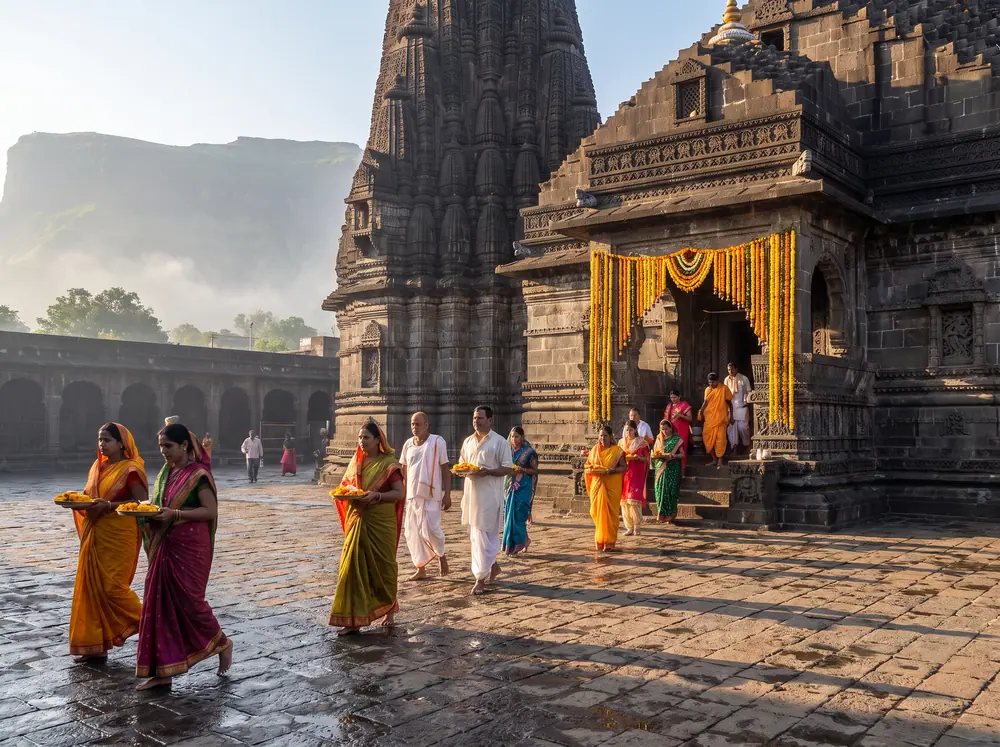
The History of Trimbakeshwar Temple
From the legend of Sage Gautama to the Peshwa-era temple of black stone: how Trimbakeshwar, one of the twelve Jyotirlingas, came to be what it is today.
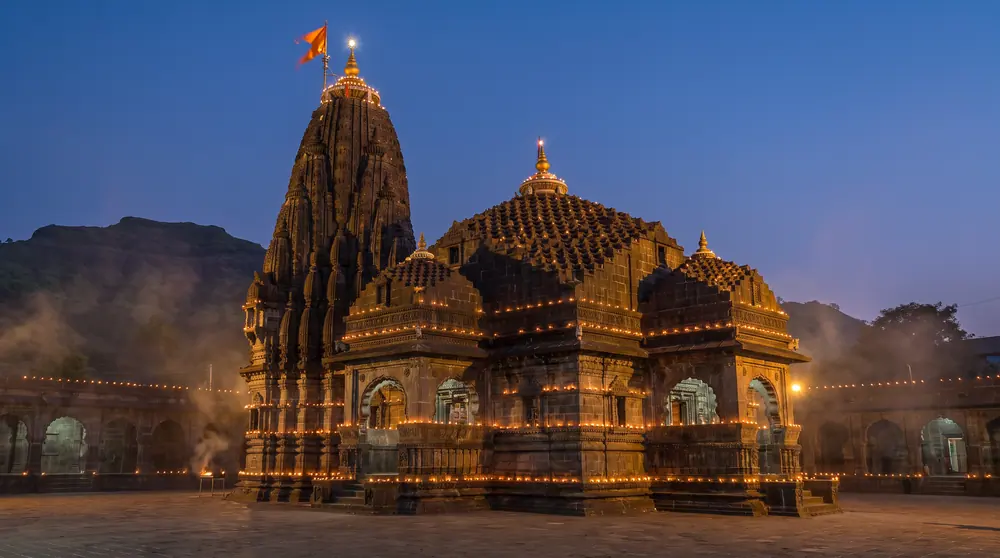
What Is a Jyotirlinga? Trimbakeshwar's Place Among the Twelve
The meaning of a Jyotirlinga, the story of Shiva's pillar of light, the twelve shrines, and why Trimbakeshwar holds a special place among them.
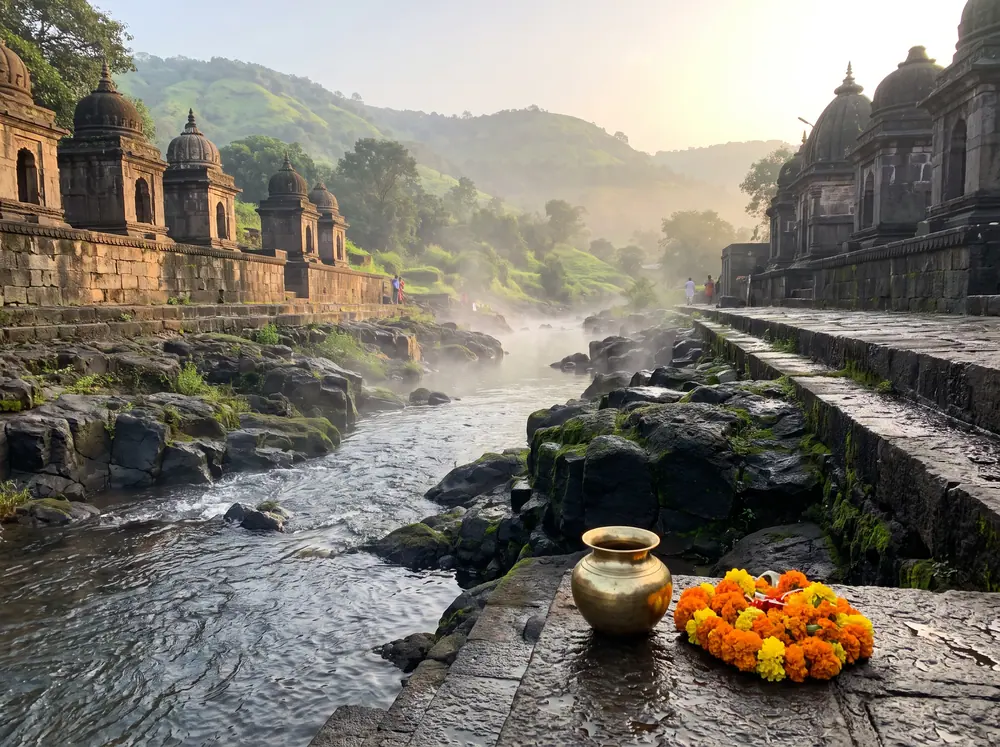
The Origin of the Godavari at Trimbakeshwar
How the Godavari, the Ganga of the South, rises on Brahmagiri: the legend of Sage Gautama, Gangadwar, Kushavarta Tirth, and the river's long journey to the sea.